Page 5 of 6

GUNPOWDER MAGNOLIA (Patreon Serial) Sample Chapter

Gunpowder Magnolia preliminary cover

Gunpowder Magnolia is a serialized story that I publish once every odd month to my $3 patrons on Patreon (with my other serial, Sazuma, falling on the even months). It takes place in my new flintlock fantasy universe, Altima, along with Sazuma, Seven Forsaken, and a soon-to-be-announced novella.

The following is a sample chapter for those curious about what I’ve been up to behind the paywall. I hope you enjoy!

GUNPOWDER MAGNOLIA

Chapter 1: Thunder at the Gates

At first, Dalin thought he was imagining the ship. Dust from the plains and mist from the river had a way of coalescing around Fort Yansey into a shifting gray-brown haze that made everything seem one step removed from reality. Dalin had barely slept between a late night transcribing a letter for the captain and the pre-dawn call to training. Dread had conjured those red sails, he thought, making nightmares from dust clouds. So, he blinked hard and dug his fingernails into his palm to be absolutely sure he was awake before leaning into the tower rail to look again.

The ship was still there, advancing with quiet menace over the river’s surface. As its sails bled through the mist, a symbol took shape, deathly white on red cloth. The dancing crane of Yao.

“Ship!” he exclaimed in horror. “Enemy ship!”

It was only a moment later that he remembered what he was supposed to do and scrambled for the hammer to sound the alarm. Yansey’s bell was old and flakes of green jolted free, raining like ash on Dalin’s boots as he drove the hammer hard and fast against the tarnished bronze. Like the rest of the fortress, this bell likely hadn’t seen action in a hundred years.

“Enemy ship!” he called again as the bell reverberated around the fort. “It’s the Yao!”

Unlike the fort they guarded, the men within Yansey’s walls were fresh and strong. Below the watchtower, they surged into motion with mechanical efficiency, a hundred and fifty blue-uniformed figures moving as one. As pikemen grabbed their shields and gunmen raced to man the walls, footsteps pounded up the tower steps. The first officer to the platform was Lieutenant Luyang Lanthe.

“I’ll be damned,” he swore, peering through the mist. “It is the Yao.”

The lieutenant was a stout, lowborn soldier from outlying Ro, with the features of a farmer and the eyes of a tactician. As far as Dalin knew, he was as unflappable as any Ro general and twice as clever. The look of shock on his face was more unsettling than the ship itself.

“Wh-why is this happening, sir?” Dalin couldn’t help stammering, knowing that the fear in his voice didn’t befit a soldier of Ro. “I thought we weren’t expecting any attacks.”

“We weren’t.”

“We’re not prepared for a siege,” he blurted out.

“We’re Ro.” Luyang turned to Dalin, his black-eyed gaze returned to its usual steadiness. “Give it five minutes.”

Had anyone else been speaking, the words would have done nothing to quell Dalin’s nerves. But something about Lieutenant Luyang had always comforted him. Dalin supposed it was probably the far western almost-Yao accent, so close to his mother’s.

“Yes, sir.”

Captain Arza wasn’t far behind his second lieutenant; apparently, he had also needed to see for himself.

“Any idea why they’re here, sir?” Luyang asked when the captain had sized up the ship.

Captain Arza, while he was not born high enough to ascend to the rank of general, was a veteran of many battles. This wasn’t the first fort he had held against the Yao. Yet even he could only shake his head in confusion. “I don’t know.”

Fort Yansey was on poor land, far from Ro’s rich soil, mines, and major ports of trade. Bandits barely even bothered coming this way. For the weeks Captain Arza’s force had been at Fort Yansey, the only ‘intruders’ Dalin had spotted during his watch had been a pod of speckled river dolphins.

“They’re coming ashore,” Luyang noted. “They must have rowed upriver for days to get here… Here,” he repeated, seemingly more to himself than anyone else. “Why?”

“There is no tactical reason for the Yao to take this fort,” Captain Arza said, bemused.

That had been Dalin’s thought. Yansey was a relic from when Ro had faced invasion from the now-long-gone kingdoms to the south. Its only real use these days was to monitor the few trade ships that used the Seizang River to pass between Medyan and the kingdoms farther east.

“Well… there must be a tactical reason, sir,” Lieutenant Luyang said. “We just haven’t figured it out yet.”

“Yes,” the captain grunted. “Not like they came here for the view.”

“How many men can a boat like that hold, Captain?” Luyang’s brow was furrowed as he surveyed the approaching ship. “A hundred soldiers plus cannons? Two hundred soldiers with no cannons?”

“Two hundred or two thousand, it doesn’t matter,” Captain Arza said gruffly. “They’ve come to Ro flaunting enemy colors, so they’re dead men. To your positions, both of you.”

Like all soldiers of Ro, Dalin carried his gun and sword every waking moment. It took him only a minute to descend the tower to his position on the front wall, facing the river—which was embarrassingly almost twice the time it took Second Lieutenant Luyang, who was a head shorter than he was, and Captain Arza, who was twice his age. No matter how hard he tried, Dalin never did seem to meet the lowest standard for his country’s military.

The Yao ship had dropped anchor in Yansey’s natural harbor, its red sails a promise of blood as its soldiers disembarked. Red-clad archers and spearmen splashed through the knee-keep water, falling into lines as they hit the shore, and Dalin was ashamed to find his hands shaking.

Yansey was an old fort, built long before the advent of firearms and lacking the mounted cannons of newer forts. The Ro had only the thick fieldstone wall and their gunmen for defense—and that was if the shooters could stay alive. These ramparts were built for archers, not gunmen, and provided little cover.

“Two-hundred even,” Lieutenant Chang Tairo counted as the last of the Yao fell into formation, and Dalin straightened up to look for himself.

During the defensive drills, Dalin hadn’t thought much about how close his position was to Captain Arza and his ranked officers, but in the uneasy quiet of anticipation, he found himself mulling whether this was an especially good or especially bad place to be. On the one hand, he would hear orders better than the soldiers further down the wall when the cacophony of battle set in. On the other, Yao arrows intended for the ranked officers were likely to hit him on their way there.

At one-hundred-fifty strong, the Ro of Yansey were outnumbered, but that didn’t necessarily put them at a disadvantage. Holding a fort required far fewer men than storming one. The Yao were hardly going to overwhelm twenty-foot-high walls with two hundred foot soldiers and what looked like no ladders, no battering ram, and no cannons. What were they thinking?

“Do you think they have another ship coming?” Lieutenant Chang voiced Dalin’s next thought in low tones that would not have been audible but for the disciplined silence on the wall.

“Doesn’t look like it,” Captain Arza said.

It looked like the Yao were preparing to attack immediately. The troops below had assumed an attack formation, spearmen at the front, with their red-tasseled spears pointed skyward and their rectangular tower shields ready to guard against enemy fire. That seemed foolish too. The Yao should know by now that the Ro never just fired arrows. Those beautiful lacquer and bronze plated shields that had served the Yao so well in older wars provided little protection from bullets.

“Maybe it’s a distraction, sir,” Lieutenant Chang piped up again.

“A distraction from what?”

“I don’t know. Forces from the back? Horsemen?”

“Ro is at our back,” Captain Arza pointed out, audibly exasperated. “We’d have heard from a scout if there was a force of Yao anywhere in the province.”

“Oh.”

First Lieutenant Chang Tairo was not the sharpest arrow in the quiver. It was something no one said aloud; that was simply not how you talked about the son of an esteemed general. But everyone knew that Chang Tairo’s rank was no more than a pretty, empty title to go with the young man’s pretty, empty head.

Captain Arza’s true right hand was Second Lieutenant Luyang Lanthe. During sparring and target practice, it was Luyang who walked through the training yard, correcting each man’s form. When supplies ran low, it was Luyang who surveyed the fort to make sure everyone had the boots, sleeping mats, and rations they needed. Now, it was Luyang who went down the line to speak to the soldiers. There were no melodramatic calls for courage. That was not Luyang’s style—nor, Dalin thought, something the man could pull off with his humble air and provincial accent. Instead, he spoke to the men in ones and twos, giving them precisely the words they needed to hear.

“Deep breaths, Yuto.”

“Patience, Sukyao.”

Fifty men were crammed onto the wall, shoulder to shoulder. The second lieutenant knew them all by name and spoke to them like they were his own younger brothers—though he himself was scarcely into his twenties.

“Erling, even marksmen as good as you have a margin for error. Remember to breathe and aim carefully.”

“Hailu, your father is watching. Make him proud.”

Dalin did his best to stand straight when Luyang reached him—as if that would do anything to improve the lieutenant’s opinion of him after his performance at every stage of training. Men might swallow their insults about Chang Tairo out of respect for his father, but Dalin’s parents had been minor government officials, high enough in society that Dalin had never developed the farmers’ muscles and callouses to keep up with his fellow trainees, but not so high that those same farmers’ sons hesitated to laugh at him.

Luyang rested a hand on his shoulder.

“None of us were born to this, Dalin. I want to see those steady calligrapher’s hands make every shot.”

“Luyang,” Captain Arza said sharply, “to me. Stop wasting time.”

“Sir.” Luyang said and the pressure of his hand disappeared from Dalin’s shoulder.

“It’s not a waste of time,” Lieutenant Chang protested and when the captain favored him with a cold look, added, “It’s what my father does.”

A hundred Ro eyes fixed forward in anticipation as the Yao advanced, marching boots churning up dust to drift over the river.

“Guns ready!” Captain Arza called as the Yao drew close enough for Dalin to make out the crane and lily crests on their shields. “Hold your fire until I give the command!”

Unlike the Ro, Yao didn’t trade with Medyan, meaning that their artillery was limited to arrows. It was what would usually give a small force of Ro the edge over their western neighbors, but Yansey had limited ammunition. Certainly not enough to fend off a siege for any length of time. A bow and full quiver of arrows rested at Dalin’s feet, in case the Yao were still coming after the bullets were spent.

The front line of Yao was almost in firing range when something strange happened. Their formation shifted, parting down the middle to make way for a solitary figure. Dalin’s eyesight was poor and he had to strain to bring the newcomer into focus. The man wore no armor and carried no weapons. Just white robes… like a scholar of Old Yao.

“Fuck,” Captain Arza said.

“What?” Lieutenant Chang said in shock. To Dalin’s knowledge, no one had ever heard the straight-laced captain swear. “What is it, sir?”

“They have a mage.”

A mage?

Dalin’s mother had brought him up on stories about the graphemancers of Yao’s golden age, servants of Heaven, who wielded unfathomable power. She had told him that graphemancy was a noble art, lost to the world centuries ago when the rule of Yao passed to lesser men. But if Captain Arza was right—if the man in robes was a stroke mage like the ones from the stories—then the Yao didn’t need two hundred men to take Yansey. They just needed him.

“But mages don’t exist anymore,” Lieutenant Chang protested.

“They’re not supposed to,” Captain Arza said, “but…”

Lieutenant Luyang finished the thought. “Why else would they show up without cannons?”

The man below certainly looked the part, with his long beard and blood-red sash flowing in the wind amid curls of dust. He was a painting from the flaking monastery walls brought to life. Had he not been quaking to his core, Dalin would have marveled at the romance of such a picture: here at the edge of the world, an antique fortress and a warrior from a bygone age lived again—and would bleed living blood.

“Aim for the man in white!” Captain Arza bellowed as the scholar lifted his writing hand. “Ready…” The mage was sweeping his hand through the air before him, an unearthly glow lighting his godmarks, blazing to the tips of his fingers. “Fire!”

Dalin squeezed the trigger, a thunder of bullets split the air—

And Dalin struggled to process what happened next. Sparks crackled orange in the air as all fifty bullets crashed into… something between Ro’s wall and the Yao. Nothing was there. No stone, metal, or any barrier that Dalin’s weak eyes could discern. Yet the Yao lines stood untouched. No bursts of dust or blood disturbed their formation. Somehow, not one bullet had reached them.

“Reload!” Captain Arza shouted into the stunned silence. “Quickly!”

No one reloaded faster than Ro gunmen. Even a shaky half-step behind the soldiers to his left and right, Dalin, had his pistol reloaded and cocked in fifteen seconds.

“Aim!”

Fifty guns trained on the man in white as his fingers carved a new character from nothing.

“Fire!”

The character before the mage blazed with heavenly wrath and again, the bullets sparked and rang off an invisible shield, leaving the Yao untouched.

“Captain,” Luyang said with a suppressed anxiety that Dalin had never heard in his voice. “We don’t have that much ammunition. Shouldn’t we conserve it until the mage gets closer or—?”

“He’s not getting any closer,” Captain Arza ground out. “Fire at will!”

Firing at will was dangerous with muzzle loaders in these close ranks. Sparks from one soldier’s frizzen could ignite his neighbor’s pan, causing a deadly accident. But Dalin understood the captain’s calculated risk as he rammed a new patch and ball into the barrel. The mage had to sketch a character in order to block the bullets. If those bullets weren’t coming all at once, on the same obvious signal, maybe one would hit him.

By this time, however, the Yao troops had drawn close enough to make use of their archers.

“Halt!” the commander called out in Yao—a language Dalin hadn’t heard since he was young enough for his mother to sing him to sleep. “Draw!”

A hundred white silk bowstrings pulled taut.

“Fire!”

The coward in Dalin twitched with urge to duck, but the volley of arrows arced high over Yansey’s wall to rain on the fifty Ro pikemen who were arrayed inside, ready to brace and defend the gate.

“Shields!” Captain Arza boomed over the gunfire.

Dalin didn’t look back, but he heard the almost musical clang of arrows glancing off shields below. A second volley of arrows met Ro’s impenetrable shield wall as more bullets met the mage’s invisible barrier. It was a stalemate. Ro’s bullets couldn’t reach the Yao, but the Yao couldn’t storm Yansey without siege equipment. A cry of pain and one of the Yao pikemen crumpled. He had taken a bullet to the knee. The mage’s spell had dropped!

“Shoot him!” Captain Arza bellowed, recognizing the precious window. “Shoot him now!”

The graphemancer’s right hand was writing with frantic speed, extended toward the fortress doors. A bullet tore through one of his sleeves as he finished the spell, a new character ignited the air before him—

And the world blew apart.

The sound alone blasted the soul from Dalin’s body. His head keened like a tree of cicadas, all sound lost in the whining ring as earth and sky reeled in a spinning moment of total disorientation. He couldn’t breathe. When his head lolled to the side, coarse hay crackled on his cheek and he saw another gunman sprawled in the dust beside him. Erling, the cobbler’s son. He was dead, his neck bent at the wrong angle, eyes unseeing.

Not far beyond Erling’s body, Lieutenant Chang and Second Lieutenant Luyang were dragging themselves to their hands and knees. As sound and clarity ebbed back to Dalin, he realized that they were all of them on the ground inside of Fort Yansey. Whatever the mage had done, it had thrown them backwards off the wall.

Rolling onto his side, Dalin blinked through a stinging haze of rock dust and didn’t understand what he saw. Yansey’s front gates were gone, along with most of the surrounding wall. With one word, the graphemancer had summoned the power of a hundred cannons to blow a hole in the front of Fort Yansey, throwing a dozen gunmen to the dirt like straw dolls and sending fragments of rock and metal high into the air. A hunk of stone thudded into the straw beside Dalin and, through the ringing in his ears, he heard hundreds more clattering off the pikemen’s shields and crashing through the wooden structures of Yansey’s interior.

Like Dalin, the first and second lieutenants had landed among the hay bales intended to feed the fort’s few horses, saving them from mortal injury. Pikemen from the back row had broken formation to check on the fallen officers. But of those the shockwave had blown from the wall, Dalin and the two lieutenants seemed to be the only ones moving.

“Captain!” one of the pikemen was saying as Dalin struggled to his hands and knees. “Captain Arza!”

The captain’s blue cape stood out in the muted gray of the surrounding fort—as did the deep red spreading from his head to drip, drip off the edge of the stairs where he had fallen. He wasn’t moving. The pikeman, who had been trying to rouse the captain, turned to the lieutenants with a look of pain.

“He’s dead.”

“What do we do?” asked another pikeman.

“Fight.” Lieutenant Luyang was on his feet, yanking his uniform straight as if he hadn’t just spun thirty feet into a hay bale. “No one told you to leave your positions.”

The men jumped at the rebuke, running to rejoin the other pikemen facing the cloud of dust that moments earlier had been Yansey’s front gate. For the moment, there didn’t seem to be any movement on the other side of the cloud. Perhaps the Yao were waiting for the dust to clear before the inevitable charge, so they could gauge the number of Ro inside before rushing in. With the wall out of play, the advantage of numbers was against the Ro. If they were going to hold a half-destroyed fort against the Yao, they needed to organize fast.

“You’re the captain now, Lord Tairo.” Luyang turned to Chang Tairo, who was still on his knees in the hay, nursing a broken arm. “What are your orders?”

Red-fletched arrows had started whistling through the breach, pinging off shields. One struck an unprepared pikeman in the shoulder.

“Captain Chang!” Luyang shouted more urgently. “Your orders!”

“I…” The general’s son had gone pale, his eyes unfocused. “I… don’t…”

“Captain!” Luyang shook him. When Chang Tairo still didn’t respond, a decision solidified in Luyang’s eyes. He turned from Chang to face the troops.

“Man the gap!” he ordered over the confusion. “Shields up, spears forward! Gunners, fire at will!”

Only thirty-some gunmen remained atop the wall but they hurriedly opened fire on the Yao below although, in the swirling gray, it was impossible to see whether the bullets hit their targets or met with more magical shielding. When a Yao war cry rose in response, it became impossible to hear as well.

“Dalin!”

“Yes?” Dalin jumped at the sound of his name. “Sir?”

Lieutenant Luyang stalked over and Dalin felt the color drain from his face, certain he was going to be admonished for quaking like a leaf—and for losing his gun. God, where had it gone? It must have landed somewhere—

“Your mother was Yao.”

“What?” Dalin was stricken. Harsh words were to be expected, but he hadn’t taken the lieutenant for one to resort to the schoolyard insults Dalin had last suffered at eight years old.

“Your mother,” Luyang repeated. “She was from Yao. You grew up with the language.”

“Yes, sir.”

“Can you read their script?”

“Some, sir.”

“Some’ll have to do. Come on.”

Before Dalin could ask what was going on, Luyang addressed the next highest ranked soldier—second lieutenant now that the captain was dead—“Githya!”

“Sir?”

“You’re in command here. Forward into the breach. They opened the gates. Make them regret it.”

Dalin watched his own doubt flicker across Githya’s grizzled face even as he nodded, “Yes, sir. But the mage—?”

“Can’t blow our men away if they’re in with his own.” Lieutenant Luyang said with confidence that visibly eased some of Githya’s doubt. “I have a plan, but it relies on you keeping those Yao busy.”

“Done, Lieutenant,” Githya said and turned to take command of the pikemen. As he called them into an attack formation, Lieutenant Luyang turned to scan the wall with thinking eyes.

“Suya!” he called after a half second’s thought. Yansey’s best marksman turned at the sound of his name.

“To me!”

Lieutenant Luyang didn’t wait for Suya to descend and catch up before running to where Captain Arza lay dead. Muttering an apology, Luyang turned his body over, unfastened the strap of his musket, and pulled it free. It was a heavier, more powerful weapon than any other gun in the fortress, closer to a small cannon than a rifle. Luyang, who was on the small side, strained under its weight.

As Suya reached them, Luyang hefted the dragon musket in his direction and said, “You trained with one of these at your previous camp, yes?”

“Yes, sir.”

“Good. This is yours now.” Luyang thrust the cannon-like weapon into Suya’s hands, visibly grateful to be rid of its weight. “Follow me.”

Dalin and Suya shared a look of confusion but followed the lieutenant to the center of the fort behind the pikemen.

“Where are we going, sir?” Dalin asked.

“Yao magic is all about fancy writing, right?” Luyang said without slowing. “That’s what the mage is using to summon shields, and fire, and all that reality-defying nonsense?”

“Yes, sir.”

“Perfect. You’re going to read.”

“Read?” Dalin said as Luyang led him onto the raised wooden platform the captain used to address the troops each morning.

“Yes.” Turning Dalin around by the shoulders, Luyang pointed toward the mage, who they could now see clearly over the heads of the Yao soldiers and their own Ro pikemen. “Obviously, there’s a rhythm, a pattern to his attacks and defenses. Just like swordplay. Read it.”

“I’m a terrible swordsman, sir,” Dalin pointed out—as if the lieutenant didn’t know. It was why Luyang had stationed him on the wall. With a gun, he did occasionally land a hit.

“That’s not the point. Everyone has habits. Everyone has defensive gaps. Watch, Dalin. Tell me his.”

“I don’t have the best eyes, sir.” Too much reading by candlelight, his father had always said. “I-it’s too far to see,” Dalin stammered and cringed, expecting the lieutenant to say something disparaging. He said something worse.

“Then we’ll have to get closer.”

“What—?”

“Keisai, Entha, Juryo, Velwei!” the lieutenant called the names of four pikemen from the back of Githya’s formation, “to me!”

And they were moving again, down the platform steps toward the back of the fort, the four pikemen falling in behind them.

“Where are we going, sir?” Suya voiced Dalin’s thought, impressively managing to match the lieutenant’s pace with the dragon musket slung over his shoulder.

“Out the royal passage.” Luyang snatched a crescent glaive from the spare weapons rack without breaking stride. “We’re going to go kill that mage.”

The royal passage was a slit in Yansey’s back wall barely big enough to fit a man’s shoulders. The idea was that a small party could sneak out of the fort—a ruling family on the run, maybe a solitary messenger—but it could never accommodate an attacking force. To get through, the seven soldiers had to fall into single file and slide through sideways, scabbards and gun belts scraping stone as they went.

The door at the far end was a bronze-reinforced stone obelisk hinged over the slit. It could be unbolted and pushed open from inside but was impossible to open from the outside.

The rusted bolt screeched in the dark and there was a grunt as Lieutenant Luyang pushed against the door.

“Lieutenant?” one of the pikemen said.

A sigh. “Juryo, push on my shoulder.”

“Sir?”

“I’m not strong enough,” Luyang said. “Put your shoulder to mine and push.”

There was a clunk of muscle and weaponry as Juryo rammed against Luyang. Boots scraped on the ground as both of them strained to move the ancient door. With a another rusty screech, the door budged a fraction of an inch. It was only after Suya threw his shoulder into Juryo that the door grudgingly grated open, revealing a sliver of morning wide enough for Luyang to squeeze through.

“Alright,” the lieutenant said once he was out. “All clear.”

While slight Luyang had slipped through, it took a few more inches of nudging to accommodate the broader chests of Suya and the pikemen. The plains at Yansey’s back were as empty as Captain Arza had predicted, a featureless expanse that didn’t get green for many miles.

“Come.” Lieutenant Luyang motioned the party along Yansey’s eastern wall in discrete single file until they reached the corner and the sounds of battle. “Pikemen, flank Dalin and Suya. We’re going to get them close to the mage.”

“How close, exactly?” Juryo said nervously.

“As close as Dalin needs to be. He’s going to call it.”

“And then?” Suya said.

“Then we’re going to hold our ground until I tell you to shoot.”

“Wait.” Dalin’s voice came out shaking. “Wh-what?”

“Just do as I say.” Luyang planted a hand on his back. It was that hand that gave him the strength to take one step, then another, then another toward the line of Yao.

For the moment, the Yao troops and their graphemancer were preoccupied with the Ro ferociously defending the gap before them. In the whir of dust and smoke, one could scarcely discern the difference between Yao red and Ro blue. With the blinding sun at their backs, covering their approach, Luyang’s tiny party went unnoticed.

“Forward,” Lieutenant Luyang ordered as the four pikemen fell into practiced defensive positions around Dalin. “Forward until Dalin can read.”

And, taunting death, they inched closer to the Yao.

“Eyes on the mage, Dalin,” Luyang said, noticing his gaze straying to the Yao and their spears. “Nothing else exists.”

“Yes, sir.”

Dalin’s mother had said that a mage’s abilities were limited only by the graphemes he had mastered, and this one had more than just a shield and a shockwave in his arsenal. Whenever he found a clear shot at one or more Ro soldier, there was some new horror. Two were incinerated. One man seemed to turn inside out, fat and blood spurting from his eye sockets.

“Now,” Dalin said the moment the mage’s right hand sharpened to more than just a bright blur. His voice was shaking. “S-stop here.”

Luyang lifted his fist and their miniature formation came to a halt dangerously close to enemy lines, no more than thirty feet from the nearest Yao soldiers. Thank God in Heaven that their fellows were fighting hard enough to keep the enemy’s attention.

“You can see from here?” the lieutenant asked.

“Yes, sir.” Whether or not Dalin could read what he saw was another matter entirely. At least the mage’s hand moved deliberately, drawing glowing lines through the air that lingered like floating fire until the spell was complete.

In his periphery, Dalin sensed a change in the Yao troops’ movement and turned to find an archer looking straight at him, nocking an arrow. He took aim between Dalin’s eyes—and jolted back, as a Ro bullet punched through his breastplate. A second Yao soldier tried to rush them and got the crescent end of Luyang’s glaive.

“Focus, Dalin!” the lieutenant ordered, kicking the wounded Yao back to the ground, where Velwei drove a pike through his chest. “You’re covered! Focus or we’re all lost!”

“Yes, sir,” Dalin said and, against all his instincts, wrenched his eyes from the carnage back to the mage’s fingertips.

He hadn’t read Yao characters in years, not since his mother’s passing. But he focused now. For Yansey. For Ro.

“It’s backwards,” he muttered in frustration, noting the man’s fingers moving right to left. Of course, the mage would draw the character facing himself, meaning that anyone else had to read it the wrong way around.

Brows drawn tight in concentration, Dalin moved his index finger over his own open palm, trying to mirror the mage’s strokes, trying to remember… Blood splattered across the bridge of his nose as Juryo cut down a man to his left, but he kept his eyes trained on the mage’s hand as his own fingers scratched back through his memory.

Dalin’s mother had explained that graphemancy was so difficult because each character had to be drawn perfectly, with the skill of a master calligrapher. Rushing could ruin a spell the same way it created unsightly ink blotches and malformed characters on a page. True to the legends, this mage’s every stroke was precise and impassioned, pulling Dalin back to his mother’s skillful calligraphy.

And there! The strokes on Dalin’s palm coalesced into a memory of ink-stained paper, his mother’s hand on his, guiding it through the strokes, her voice prompting softly, and this radical means…

“Protect!”

“What?” the lieutenant said, breathless from combat.

“And steel… and… wall! Enclosing wall!” Dalin exclaimed as more memory fragments slid into place alongside the first, like the pieces of a woodcut puzzle. “That’s the shielding spell!”

“Looks like,” Suya grimaced as another rain of bullets bounced off an invisible barrier around the mage and the Yao soldiers who had stayed near him.

“Good work, soldier,” Lieutenant Luyang said. “All you have to do now is let us know when he does it again. The moment he does it again. Suya, line up your shot.”

The mage wielded his terrifying arsenal of spells one after another, summoning fire there, a shockwave there, but he obviously had to return to the shielding spell periodically or he was vulnerable to gunfire.

Now that Dalin’s eyes were adjusting to the backwards characters, he recognized more radicals from his childhood. Fire. And alongside it… eat? No—eat without the tooth radical… Consume? The character glowed bright at the mage’s fingertips and then exploded forward, turning to a column of fire that swallowed a Ro pikeman whole. He was ash before he had time to scream. The heatwave broke on Dalin’s skin a moment later, crackling with heavenly power.

“There!” Dalin exclaimed when the mage started in on the protect radical again, followed quickly by steel and enclosing wall. “That’s the one.”

As the graphemancer moved on to a new spell, the lieutenant started counting under his breath at a steady clip, like marching boots… “three, four, five, six…”

Dalin recognized the fire radical againand wished his voice was loud enough to shout a warning to the charging Ro pikemen before they burst into flame.

“… eleven, twelve, thirteen…”

But the mage’s next strokes didn’t form the radical for consumption. Instead, there was the radical for Heaven and… hammer? Before Dalin’s mind could put them together, lightning forked from the mage’s hand into a man’s chest, throwing him backwards into two other Ro soldiers, frying all three.

Dalin flinched but beside him, Luyang’s voice didn’t falter—even as he rammed his glaive so hard through a Yao soldier’s stomach that it came out through the man’s spine and stuck there as he fell.

“…nineteen, twenty, twenty-one, twenty-two…”

Bullets struck the dust near the mage’s feet and his fingers were moving again.

“There!” Dalin said. “The shield ran out. He’s renewing it!”

The lieutenant made no response. He just drew his sword and counted, starting again at one, “two, three, four…”

By Dalin’s side, Suya was stock still, dragon musket poised on his shoulder. The marksman didn’t even flinch when Juryo took an arrow to the gut and Luyang cut down a Yao spearman scarcely a foot from him.

“… seventeen,” the lieutenant breathed, “eighteen, nineteen, twenty, ready Suya… Fire!”

The sound of the dragon musket so close to Dalin’s ear was deafening.

And, for the second time that morning, the world changed on a bang.

Suya’s bullet caught the mage in the left breast, just above the heart.

The stately Yao staggered in shock, a hand to his wound as red bloomed like magnolia petals on the white of his robes. Motion on the battlefield slowed in disbelief.

Genius. Yet so simple, Dalin marveled, wondering at how he hadn’t understood the plan earlier. Lieutenant Luyang had counted to the exact moment the mage’s shield would open and placed Suya’s impeccable shot right where it needed to be. Everyone has defensive gaps.

A roar of triumph went up on the Ro side of the wall as the Yao stood in shock. But it wasn’t over yet. The mage had lifted fingers dripping with blood and started to write again. With a hole so near his heart, he would bleed out, but not before finishing one last spell.

“Shit!” Suya hissed, already racing to reload the dragon musket, but Dalin knew exactly how long it took to reload a gun relative to how long it took to write a ten-stroke grapheme. Suya would never line up the shot in time, and the remaining Yao soldiers had fallen back to close in front of the mage, presenting a wall of shields, armor, and flesh against the next bullet.

Dalin’s heart dropped as he saw the mage complete the radical for Heaven, hammer then another series of radicals: sky, field, compass… What did that mean?

You know what it means, Dalin’s mother murmured sweetly in his ear. All encompassing.

The mage was going to bring lightning down on the entire field.

We’re dead, Dalin thought. Ro, Yao, all of us are dead.

Before the thought turned to an undignified cry of terror, hope appeared in a bolt of blue—Lieutenant Luyang, sword drawn, closing the last ten feet between himself and the mage. To have gotten there so fast, he must have laid into a sprint the moment Suya squeezed the trigger.

The nearby Yao soldiers were so preoccupied scrambling to shield the mage against fire from the fort and the lieutenant was so small, no one noticed the lone Ro racing in from the side. One spearman saw Luyang at the last second and cried a warning—too late.

Luyang’s sword sheared upward through the mage’s right wrist, severing his hand along with that otherworldly line of light that ran from his core to his fingertips. The connection broke in a shower of sparks and blood.

The graphemancer’s lips parted to scream, but before he got the chance, Luyang’s sword swept back around—through the neck. The mage had crumpled to a heap of robes by the time the Yao pikemen reoriented themselves to face the lieutenant. The man closest to Luyang had raised his spear when the dragon musket cracked the air, deafening Dalin all over again.

The pikeman’s head split open in a wet burst of red and he went down.

“To the lieutenant!” Suya’s voice was distant to Dalin’s ringing ears, but it commanded the attention of every Ro in the wake of the dragon musket’s thunder.

“To the lieutenant!” the cry repeated across the Ro troops, a single reverberant purpose sending them all into motion.

Gunfire dropped off as Ro’s remaining gunmen plunged into the fray below and Yansey’s pikemen surged forward. In moments, blue-clad men poured out of the breach, breaking through the lines of surprised Yao with Ro’s trademark ferocity. On the bang of a gun and the sweep of a sword, the tide had turned. Dizzy with the shift, Dalin fumbled to draw his sword—only to find his fingers closing on air.

God, no.

He had realized that he had lost his gun in the fall from the wall but he hadn’t checked for his sword. For shame, soldier. Always check.

As the field broke into the bloody chaos of close combat, Dalin ran to retrieve the lieutenant’s glaive from the Yao soldier’s body where it had stuck. Seizing the shaft, he tried to pull it free, but the crescent’s curve caught on a rib. Dalin placed a foot on the corpse’s chest to try again when something hit him.

It could have been a sword, a spear, or a stray bullet. All Dalin knew was that, after the jolt, the world went slow, went fuzzy… then cold.

Time slipped.

He was lying on his side when the sounds of battle turned to Ro cries of victory. He knew the voices were close, but they seemed a million miles away, in a world fading from view like a vision in dust and mist.

“Dalin?” Mother’s voice said above him. Then, “Oh, no.”

Knees thudded to the earth by Dalin’s head and calloused hands were on his face, damp with cooling sweat. That wasn’t his mother’s touch. These were the rough hands of a peasant and a soldier.

“No, no, no…” Lieutenant Luyang was repeating miserably, and his voice had gone strangely high. Maybe it was just the shock, but God… he sounded so much like Mother.

As the world came apart, so did the lieutenant, tears dropping from his eyes onto Dalin’s forehead. It wasn’t uncommon for a soldier to cry for a fallen comrade. Dalin knew that. Even so, there was something strange about the way Luyang was crying, the way his small, sturdy fingers so tenderly smoothed Dalin’s hair back from his face, the way his sobs went breathy as he lost composure.

“I’m sorry.” The wetness of tears had made Luyang’s eyelashes darker and more pronounced. Through the grime, his lips and cheeks were pink. “You did so well, Dalin. This is my fault… I should have made sure you had a weapon.”

And, in Dalin’s final moment of clarity, he realized why the lieutenant had always reminded him of his mother.

God in Heaven, was his last fully formed thought, Lieutenant Luyang is a woman.

Read more chapters on Patreon >>

As always, you can keep up with the latest news and free fiction through my newsletter

Gunpowder Magnolia is a serialized story that I publish once every odd month to my $3 patrons on Patreon (with my other serial, Sazuma, falling…

Continue reading → GUNPOWDER MAGNOLIA (Patreon Serial) Sample Chapter

SPFBO Finalist 99c Fantasy Sale

Hello Dear Readers!

M. L. Wang here, just posting to let you know that over thirty current and former SPFBO (Self-Published Fantasy Blog-off) finalists have their books on sale for 99c. The sale will run from today (January 14th, 2021) to the 20th, so be sure to visit the list during that time and grab whatever fantasy titles good to you!

SPFBO Sale graphic featuring Fionn, Aching God, Paternus, Orconomics, Darkness Forged, The Way into Chaos, Blood of Heirs, Symphony of the Wind, The Path of Flames, Last Memoria, The Sword of Kaigen, Kalanon's Rising, Where Loyalties Lie, Shadow of a Dead God, Blade's Edge, The Fall of Erlon, Fortune's Fool, Voice of War, Tiger Lily, Nether Light, Bloodrush, The combat Codes, The Crimson Queen, The Gods of Men, What Remains of Heroes, The Lost War, A Wind from the Wilderness

Browse All 30+ Fantasy Books >>

Featured books include SPFBO winners, Where Loyalties Lie by Rob J. Hayes (2017), Orconomics by J. Zachary Pike (2018), and The Sword of Kaigen by me (2019), SPFBO runners-up, Bloodrush by Ben Galley (2015), The Path of Flames by Phil Tucker (2016), The Gods of Men by Barbara Kloss (2018), and Fortune’s Fool by Angel Boord (2019), as well as nine current finalists, Last Memoria by Rachel Emma Shaw, The Combat Codes by Alexander Darwin, The Lost War by Justin Anderson, Darkness Forged by Matt Larkin, Voice of War by Zack Argyle, The Fall of Erlon by Robert H. Fleming, A Wind from the Wilderness by Suzannah Rowntree, Shadow of a Dead God by Patrick Samphire, and Nether Light by Shaun Paul Stevens.

Hello Dear Readers! M. L. Wang here, just posting to let you know that over thirty current and former SPFBO (Self-Published Fantasy Blog-off) finalists have…

Continue reading → SPFBO Finalist 99c Fantasy Sale

2021 Goals & Projects

A look back at my productivity in 2020 and a new plan for the new year

Last year around this time, I had just discontinued my project of over a decade, scrapped years of writing, and was trying to reset my compass again in strange waters. So, I knew before things even got weird out in the world that I was in for a rough 2020. And where the pandemic brought other people’s plans to a halt, it forced me in close with mine. After all, what’s there to do with a year indoors but write?

Since 2020 represented such an intense period of uncertainty, discovery, and growing pains, I want to start off 2021 by looking back at the goals I set myself one year ago. Where did things go right? Where did I fall short? And where do I want to make adjustments going into year two of this already ridiculous decade?

These were my intended projects for 2020:

  • The trilogy follows four spies, each doing a different job for the matriarchal government of an ancient city-state. Lemurs are involved. It’s weird. Details later.
     
  • The duology is a retooling of an f/f Mulan retelling I first attempted years ago. Fortunately, the thing that didn’t work about Attempt 1 was not the plot but the historical setting (which gets messy as soon as you start pulling from Mulan myths of different eras). So far, transplanting the same plot beats into a high fantasy setting has gone much better.

So, how did these go? Well, I’m glad I had the foresight not to estimate a release schedule because both these concepts took months of trial-and-error runs before I figured out exactly what I wanted to do with them. As of right now, I have book 1 of both projects straight on their tracks and moving forward.

Sazuma preliminary book cover

“The trilogy,” now titled SAZUMA, is releasing one chapter at a time on Patreon and not much has changed from that very loose premise I wrote last year. There are still lemurs and it’s still weird. Of all my ongoing projects, this one is the most intimidating to write, since it represents my first foray into both mystery and political intrigue, but I’m having fun so far. We’re currently two chapters in.

“The duology,” now titled GUNPOWDER MAGNOLIA, I’ve also serialized on Patreon. This one has departed dramatically from my original concept, doesn’t very much resemble any version of Mulan, and may not end up as a duology. We’re currently just one chapter in, but there’s a new one coming out this month!

In last year’s post, I also wrote: “Of these two concepts, the one that writes faster may turn into a new newsletter serial while I take my time with the slower-going one.”

Well, instead of doing that, I started a third totally separate newsletter serial called Seven Forsaken. Set in the same universe as Sazuma and Gunpowder Magnolia, this slow-burn sci-fi/fantasy follows a priest-turned-mercenary… who also turns into a snake. Ironically, of my new projects, this latecomer is the farthest along at seven chapters (all free through the newsletter) with an eighth chapter coming later this month.

In addition to my potential writing projects for 2020, I also set myself some mental health and productivity goals, so we’re going to check how those went.

Goal 1 for 2020 was the following:

  • Track my word count. Measuring productivity by word count has gone poorly for me in the past, resulting in scenes that go too long instead of getting finished faster, but that was a long time ago. I like to think I’ve become a smarter writer since my last NaNoWriMo and gamifying any task makes it more fun for me, so I think it’s worth a try. I’m going to make a spreadsheet!

I embarked on 2020 with a daily word-count goal of 3,000, which I reduced to 2,000 after two weeks revealed that the 3k resulted in zero quality control—and I do like to maintain a little quality control, even in a first draft. I managed to maintain the 2k per day word count for a few months before complications in my personal life knocked me off track and I never went back to plugging daily numbers into the spreadsheet.

So, I guess I’d give myself a D (60%? 3 out of 5 stars on Goodreads?) for this goal. That said, I think that I kept the quantity first writing approach for about as long as I should have. It gave me a chance to go broad and deep with my new ideas straight out of the gate so that when it came time to step back and assess what was working and not, I had a lot of material on which to base my decisions. Thanks to that early 2-3k a day, I was able to figure out quickly which ideas I wanted to pursue and which weren’t working so well.

As I worried in 2019, bloat and mess become serious issues when I write too much too fast a la NaNoWriMo. I’ve been known to write 400k of a story without producing a single, linear, readable chapter. That’s why this year (now that I know which stories I want to pursue) I’m setting my goals in finished chapters instead of word count.

Gunpowder Magnolia preliminary cover

Each month, I’ll publish one chapter of Seven Forsaken for the newsletter (as I have been for the past several months), one chapter of Sazuma or Gunpowder Magnolia for the Patreon, plus a third chapter, if I can swing it, in addition to the other chapters and short stories I have in the works.

My chapters clock in at 4k-12k words each. This means that between the 2-3 chapters and other writing, we’re going to be looking at around 30k words a month instead of the 60k+ I was shooting for at the beginning of 2020. But I’ve found through years of struggling to clean up my fast-written messes that a reader-ready 30k is worth far more than an uncontrolled 60k.

Goal 2 from 2020:

  • Spend WAY less time on social media. Something I learned in 2019 is that on the days I’m in a good mood, social media either doesn’t affect me or gives me an energy boost. On the other hand, on the days I’m already down, the smallest online thing will put me straight through the floor into depression (sometimes even positive attention online gives me anxiety, it’s so dumb). On those precarious days, I need to make sure I stay offline and busy with other things. So, if I vanish from Twitter for a week, it’s not because I’m dead or I don’t care about your thing; I’m just writing and probably still accessible by email if you really need me.

I aced this one with extra credit by blocking social media sites on all my devices early in the year and then only unblocking them for critical announcements, like The Sword of Kaigen audiobook going live. A resounding A+, 5 out of 5 on Goodreads, would recommend to all my friends.

I’ll be keeping social media blocked for the rest of this year. At the end of 2019, I was fussed about what social media did to my mood but, having spent this time away, I actually think that the most devastating effect it had was on my focus. A social media feed, whether it makes me giddy, angry, sad, or just passingly entertained, always pulls me out of my writing headspace. If I let my brain shift gears to absorbing Twitter discourse, checking up on Facebook acquaintances, or falling down a Youtube rabbit hole, it can take hours to haul myself back to writing mode. Some days, I never make it back, and the day is a loss. I don’t want any days like that in 2021, so the social media is staying off.

I’ll look into very carefully getting back online and “rebranding” when I have new books to launch but until then, I’m out.

And the third goal from last year:

  • More royalties to charity. I did a thing during December where I donated a portion of my royalties to the Against Malaria Foundation (AMF). That December special ($1 per book sold) isn’t sustainable through a whole year, but I do want to continue donating 20 cents from each sale for the rest of 2020 (20 cents not just because it’s a cute ‘2020’ thing but because it’s easy for my dumb brain to track: 10 books = 1 mosquito net). I’m hoping this will make it easier for me to focus on writing and marketing when I’m gripped with otherwise impotent panic about the state of the world, which has sadly been a problem for me.

I guess I get an A on this one? It’s not grueling work to periodically check the number of books sold, multiply that by .20, and donate that to AMF. I would give myself an A+ but I meant to donate monthly and I ended up being way more sporadic about it, resulting in my finances being more confusing than they needed to be. Keeping tidier records for tax purposes is definitely on my list of things to improve in 2021, but that’s way too boring to blog about, so as far as charity…

I’m going to continue giving 20 cents per sale to fight malaria in 2021… plus 5 cents for birds. Let me explain.  

AMF is my go-to charity because malaria is a leading killer of children and pregnant women in the afflicted regions (which include many of the countries that inspired the world-building for Theonite and Altima) and can be reduced with the use of mosquito nets that are relatively inexpensive to produce and distribute. AMF has been identified by Givewell as underfunded, transparent, evidence-based, and likely to save the maximum number of lives per dollar. So, most of my charity money will keep going there.

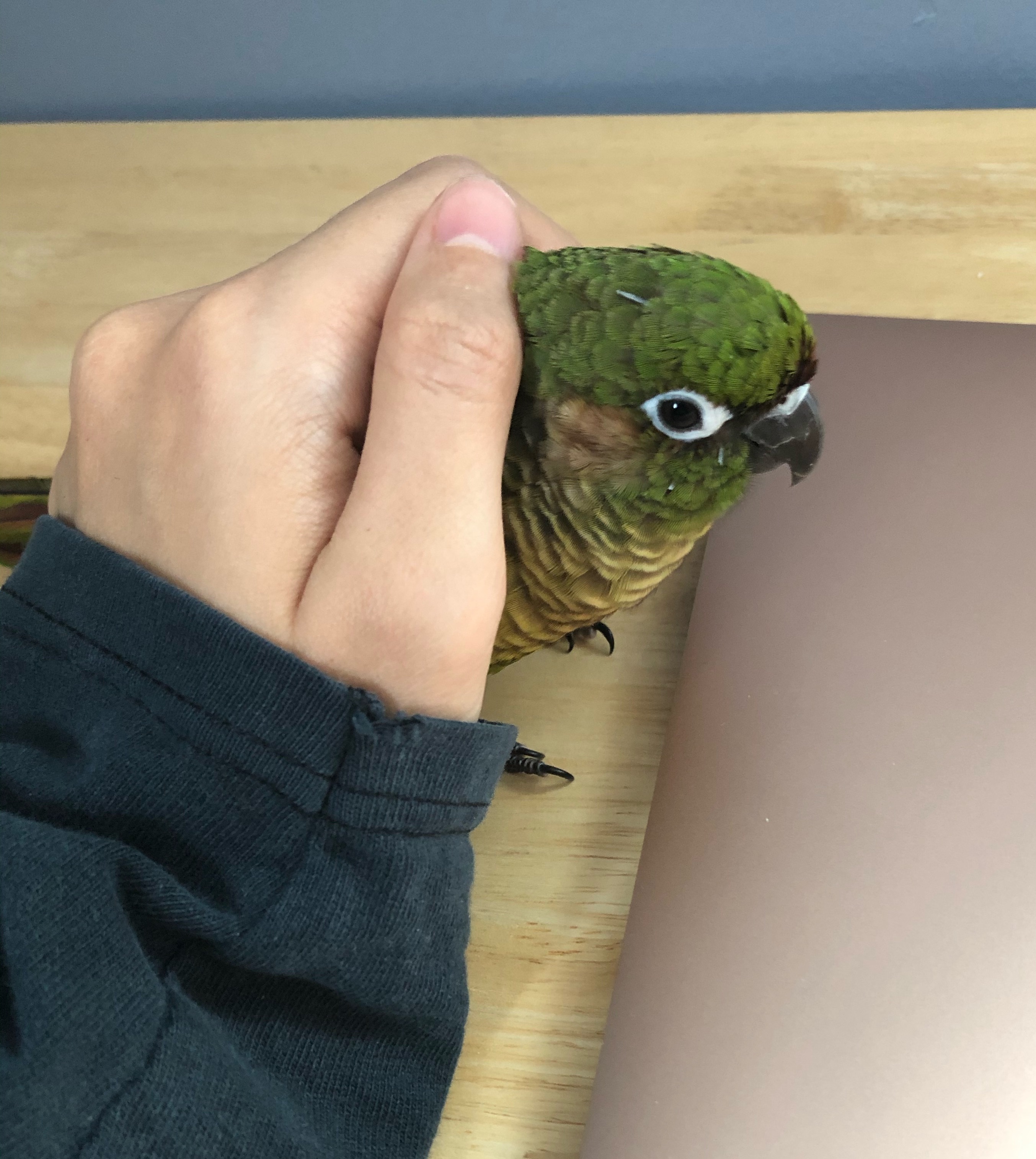
However, given how much my cuddly little parrot (Sulu) has helped me through the back half of this bizarre year, I want to set aside an additional 5 cents per sale for parrot-related conservation projects. Right now, I’m looking at Rainforest Trust, which purchases threatened forest to protect endangered species and seems to have a good track record. I’m still researching.

So, between my three goals for 2020, I averaged a respectable B+ (that’s 85%, for my non-American friends). In 2021, I’ll be gunning for 100%.

My main takeaway from this 2020 retrospective is that I wasn’t too dumb there at the end of 2019. I had a realistic grasp of the kind of work I wanted to do as well as the experiments I needed to run to get myself going in the right direction. Most of my plans held up through the practical constraints and emotional upheavals of an otherwise awful year and, writing-wise, I think I’ve come out better than I went in. The old compass might have been awobble, but it wasn’t broken.

Lest I come off too smug here, I want to say that I did drop the ball hard on some of my 2020 goals; I just haven’t blogged about them because they have little to do with writing. The main one was physical exercise and the most drastic changes from last year’s plan to this year’s have to do with that. Laughably, all my 2020 fitness goals involved getting back to karate and maybe supplementing with other martial arts I was excited to try for the first time. I’d looked up HEMA in my area, BJJ, MMA, altogether a lot of grabbing people and breathing on them, so… Going into 2021, I have a treadmill desk, a daily push-up quota, and lots of snow to shovel. That’s just going to have to do until the world is open for fun again.

As always, you can keep up with the latest news and free fiction through my newsletter

or support me on Patreon to read chapters of ongoing projects as I write them.

Become a Patron!

A look back at my productivity in 2020 and a new plan for the new year Last year around this time, I had just discontinued…

Continue reading → 2021 Goals & Projects

Brand New Stories Coming to Patreon

This news about my new Patreon is mostly copied from my November email to my newsletter subscribers.

In the course of 2020, I’m sure most of us have developed new mechanisms to cope with uncertainty. It’s been that kind of year.

Recently, I realized that, as I’ve adjusted my own mental processes, my experience of time has changed. Thinking about things in the long term (where will I be living next year? Where should I try to move if things go south? Is it even possible for me to move?) is stressful without doing anything for my happiness, productivity, or clarity. So, I’ve pushed back those unhelpful long-term anxieties by focusing on the immediate good in my life—my bird, my garden, a new sweater—and putting my energy into the small actions I can take right now to move forward.

All of this might not be relevant here except that this way of thinking has spilled over into my writing. I’ve inadvertently let go of “where do you see yourself in five years?” writing-wise, just as I have in my personal life. Where I used to think about these years-long, unrealistically-ambitious projects, I now think in smaller pieces. What can I write today that will be great, make me happy, and move me forward? What can I finish in this sitting? Basically, I’ve been thinking about my writing serially, chapter by chapter.

Around the time I started Seven Forsaken, I also started a garbage story (do not ask me about this project, I will never have it connected to my real name), which I’ve been posting under a pseudonym. In both cases—writing to a high standard and just for giggles—I’ve found that the one chapter at a time approach is the best way to keep myself creating.

All told, I’ve written more words in 2020 than possibly any other year in my life. I’ve had four projects exceed 70,000 words and one exceed 100,000 words total but, of those, only my serialized projects (Seven Forsaken and the Garbage) have yielded complete reader-ready chapters.

As a young writer, I always shied away from serialization, since I thought it would throw me off my plotting and foreshadowing game. But The Sword of Kaigen started life as a serial and that turned out to be better received than anything that I wrote as a full novel. Maybe that was the universe trying to tell me something and I’m just slow on the uptake.

So, why the self-indulgent ramble?

Well, having digested this new information about my productivity, I’ve decided to pursue the serial format with a new project (or two or three) on Patreon.

Another side effect of so much instability is a constant undercurrent of worry that the Amazon royalties won’t hold and I’ll be stuck without an income in a state where it’s barely safe to go outside. So, if even a few of you feel like becoming monthly patrons for an extra story (or two or three), I’ll be over the moon with that.

What this should do is keep me connected with those of you who like the chapter-by-chapter format and motivate me to finish more books for those of you who prefer to read the finished copy cover-to-cover. Everyone wins.

I took November off Seven Forsaken to set up a starting package for Patreon, so that those jumping in with me here at the beginning get a substantial helping of brand new content. For the moment, my Patreon has just two tiers (named after weapons because I thought that would be both cute and scalable):

$1 – Dagger Tier

This is the tier if you’re after art, sneak peeks, and background material.

  • Early cover art sneak peeks
  • Early and/or exclusive access to concept art, sketches & other world-building material
  • Extra pictures of my parrot (Sulu)
  • Short excerpts from my ongoing projects
  • Early access to chapters of SEVEN FORSAKEN (1-7 days ahead of the newsletter)
  • Early access to any other fiction or exciting news I might release to my blog or newsletter

$3 – Saber Tier

This is the tier if you want to read my ongoing novels, novellas, and shorts as I write them.

  • Everything from the Dagger Tier
  • Exclusive chapters of my ongoing projects, including:
    – SAZUMA (action, mystery, spy fantasy)
    – GUNPOWDER MAGNOLIA (f/f military fantasy)
  • eARCs of new releases whenever available
  • Early and/or exclusive access to other fiction I might share, such as short stories, extended or deleted scenes from existing stories, and chapters from discontinued works

As of this posting, the Saber Tier includes one chapter of Sazuma, one chapter of Gunpowder Magnolia, and a “lost chapter” of Theonite 3 centering on Misaki and Izumo. Both tiers include a whole bunch of new cover art and will update with new content at least once a month.

These are the only tiers I’ve set up so far, since I’m trying to start out focused on the writing projects themselves. If you’d be interested in more expensive tiers that include physical rewards (i.e. signed books, ARCs, decal stickers, bookmarks, etc.) let me know and I’ll look into setting those up… maybe when the prospect of entering a crowded post office is less terrifying.

As always, Seven Forsaken is available for FREE through my newsletter.

This news about my new Patreon is mostly copied from my November email to my newsletter subscribers. In the course of 2020, I'm sure most…

Continue reading → Brand New Stories Coming to Patreon

Audio & Life Update

The Sword of Kaigen Audiobook is here!

Buy on Amazon or listen to the sample below ⬇

The fun thing about self-publishing on Amazon is that you can’t really time when your ebooks, audiobooks, and paperbacks will go live. The best you can do is aim for your intended release date and hope for the best. So, I approved The Sword of Kaigen audio files for publication on August 18th, figuring they would go live around September 1st. Turns out, Amazon moved faster than expected, so the audio has actually been live since August 22nd. But since September 1st was the official release date I shared, I’m doing the general announcement today. I hope nobody’s too hurt that I didn’t share earlier.

Life Update: I got a new friend!!


Back in July, I told my newsletter that I was looking into buying a bird and we had a poll for what I should call him. Of the top-voted names, I settled on Sulu because parrots live a long time and I wanted a nerdom name with the evergreen appeal of original Trek.

I’d still say that the best mental health decision I’ve made in 2020 has been staying off social media (no Facebook, Twitter, Reddit, any of that except on designated book promotion days like today) but the bird is a close second. Having an antsy, chatty little friend to look after has gotten me onto a more regular schedule and given me someone to talk to through the long days in quarantine. He doesn’t know any human words yet but he does, cuddle, and burble, and listen patiently to readings of my rough drafts.

Pictured here helping me with new chapters of Seven Forsaken

Writing Update

I don’t think it’s controversial to say that this year hasn’t been the best? But the silver lining on this volatile thundercloud of 2020 is that I’ve managed a decent amount of writing during quarantine. Since discontinuing the Theonite universe in late 2019 (x), my writing energy has scattered across several projects within my new Altima Universe.

As my newsletter subscribers will know, I’ve recently started publishing one of these stories as a monthly serial titled Seven Forsaken. (If you’re up for a meandering sci-fi/fantasy mashup with guns, snakes, and a higher f**k count than my earlier work, you can read the first chapter here). This project has pushed me to finalize little pieces of world-building as I continue to take my time with the more complex books in the same universe, and I hope it makes for a fun intro to the semi-apocalyptic world of Altima.

That’s all I’ve got for updates… probably for a while?

You can subscribe to my newsletter for monthly chapters of Seven Forsaken and more pictures of Sulu!

The Sword of Kaigen Audiobook is here! Buy on Amazon or listen to the sample below ⬇ https://videopress.com/v/6AC4sL7Q?preloadContent=metadata BUY NOW! >> The fun thing about…

Continue reading → Audio & Life Update

New Monthly Serial! (map + sample chapter)

Those of you who’ve followed me for a while may know that I’ll sometimes release a story to my newsletter in monthly installments. It doesn’t do much for sales or subscriptions, but it does help me feel productive and connected to my readers as I work on longer projects in the background. (The Sword of Kaigen was a newsletter serial before it turned into a SPFBO-winning book). Now, to keep the creative juices flowing during quarantine, I’ve started a new serial set in the shiny new playground of my Altima universe (pictured in the map below).

Seven Forsaken, follows a shape-shifting priest-turned-mercenary across a distant future Earth on the verge of collapse.

You can subscribe to my newsletter for all chapters to date + a new chapter each month or just get started with the sample bellow.

Map of Altima by Marim of Sazuma

Seven Forsaken – Sample Chapter

Warnings for language, violence, and sexual content.

Isa struck with the force of cannon fire, jaws snapping shut on his victim’s sword arm. The impact alone was enough to stun most prey but Midnas Quinar was a hardened brawler, all muscle and resolve. Impressively, he managed to keep hold of his sword with a hundred teeth in his arm—not that it would do him any good. Isa’s teeth might not be venomous, but they were barbed, inward-facing, and many. Once they pierced flesh, there was no escape, and Quinar’s ferocious attempts to free himself only succeeded in tearing loose a pouch at his hip.

Stolen gold spilled onto the flagstones, vibrating in Isa’s senses as blood welled hot between his teeth, but Isa was a professional. He didn’t let the cacophony scatter his attention as he secured his twenty-eight feet of coils around his prey. Feeling the constriction begin in earnest, Quinar succumbed to fatal instinct and cried out. Isa tightened around his deflating chest, locked there, and waited.

As Quinar lost the battle for his own breath, his sword clattered to the flagstones amid the rain of shells and Isa released his arm, feeling disappointed. Quinar could no longer expand his lungs. All there was left to do was wait, and the quiet of waiting was Isa’s enemy. The work of tracking and setting an ambush kept his mind engaged. Now that the hard part was over and the ring of shells faded, memories flooded back into the empty space.

No! Isa begged his spirits. Please, not now.

He tried to focus on the feeling of power that used to come with constriction, but it wasn’t there. There was only his daughter breathing her last, her little heartbeat fading in his arms. It was stupid, Isa thought ruefully, that he could squeeze a life so tightly and yet couldn’t hold it in the world. The tighter he held on, the quicker death came.

Quinar’s breathing had stopped while his heart soldiered on, pumping, pumping against Isa’s coils as if in the hope that more oxygen would come soon. Help will come soon, Isa had lied in between kissing his little girl’s forehead, Help will come soon, in the selfish hope that it would keep her with him a little longer.

Isa pressed his head into the crook of Quinar’s neck in a miserable parody of mammal affection. Osu, fortify me, he prayed with his pit organs crushed to his victim’s mocking pulse. Aer, take this pain from meTheid… but he stopped himself short of praying to Theid the Hungry. He knew where that prayer led and there was no way back.

Quinar had gone limp in Isa’s coils, unconscious.

The job is done, Isa, said Aer and all his better spirits. Time to return.

But Isa was frozen in that embrace on the edge of death, his whole being a single muscle clenched on the moment little Taniri had shuddered and gone still. Trapped there in the knot of his own coils, Isa couldn’t move backward into the person he had been, or forward into… what exactly? A future without his daughter?

What’s the point? He demanded of Aer. What am I returning to?

To yourself, Aer said, as ze did every time, to your humanity. But zir voice was weak and far away on the misty plain of the Gray.

Isa’s soul had wandered to the great Shadow at the edge of that plain, where Theid stood, beckoning him into the python’s mind. It was so tempting—the notion of sliding into the dark simplicity of instinct, where human beings were just hotspots of sustenance, no more meaningful than cattle. In that darkness, the only emptiness was hunger, and this kind of grief did not exist.

Isa! Aer hadn’t given up the fight for his consciousness, even as his soul teetered at the border between the Gray and the Shadowland. Return!

Theid didn’t speak at all, just beckoned with the comforting arms of oblivion.

Why not? Isa thought, tipping toward the dark. Aer forgive me, why not?

A footfall jerked Isa from the precipice and he lifted his head. Without his jaw to the ground, it was difficult to gauge the size of the approaching human, so he flicked his tongue out, scenting the air. When the taste of fresh mammal landed stronger on the left fork, he turned his head that way and tasted again. He knew that scent…

The newcomer stepped in range of his pit organs, blazing hotter than any human should. The only people who ran those temperatures were those in the throes of plague or tactomancers who had magically absorbed more than their share of energy.

“I tried to find you in Rionde.” The airborne words came in faint and distorted, but Isa could never forget the cadence of that voice—hunter’s pidgin, smoothed like river stones under the tumble of a Sazuman accent. “Didn’t realize you’d gone back to doing dirty jobs in Krell.”

Damored.

Isa loosened immediately, slipping from his unconscious victim to shift back into his human form. He didn’t want to fight the tactomancer—as a snake or a man—but with all four limbs, he stood a chance of outrunning her.

The transformation itself worked like muscle memory, a tried and true pattern of mental commands he had rehearsed since he could walk. Isa’s soul and his body re-entered the corporeal world simultaneously, his mind slipped into its sheath of flesh and synapses as smoothly as ever, but he had clearly sunk too deep into the dark of the python and his consciousness was slow to catch up to the physical change. He buckled the first time he tried to stand, reeling from the absence of his thermal sensors, his mind scrambling to distribute awareness across four limbs.

The other mercenary thankfully didn’t take advantage of the stumble to attack, just stood there surveying him with her arms crossed over her chest.

“Damo…” Isa croaked when his mind got a handle on his vocal cords. He hadn’t meant to use her pet name; his confused throat muscles just caught on the last syllable, still flexing with the serpentine urge to squeeze and swallow.

“Isa of Azenkar,” she said as his eyes brought her form into focus in the dim light of dusk. “Been a while.”

Damored the Drifter was every inch the stunning terror Isa remembered her, brown forearms corded with muscle, luminous freckles scattered like stars across her skin, her curls gathered into a crown of braids before frizzing into clouds about her shoulders. Her people were known for their formidable stature but even among Sazumans, Damored was a tower, with half a head on Isa. She may have forgone her hunter’s leggings for a dress befitting a lady of the Riverlands, but Isa had seen the thighs under that skirt and knew they could crush a man’s head like a melon.

“You…” Isa stood despite a piercing pain in his temple—like Theid still had a claw in his head, pulling him off balance. “Why are you here?”

“That’s just what I was going to ask you,” Damored shot back. “Last I heard, you’d settled down with that little chatterbox of a priestess. What was her name?”

“Spensa.” Her name lived on his lips like a prayer. His bunkmates on previous jobs had complained that he said it in his sleep.

“That’s the one!” Damored grinned. “Whatever happened to—” She cut off as a rust-colored shape loped past her out of the shadows of the alley, scattering a few rats before it. A red lemur. The creature crawled over Midnas Quinar’s unconscious form, sniffing and pawing at the man’s shirt with tiny black hands.

“I take it, that’s yours?” Isa said.

“Of course,” Damored smiled. “How’d you think I found you?”

Having sniffed a perimeter around Quinar, the lemur wheeled in a confused circle, and Damored laughed. “Poor thing thinks she’s lost you. Here, girl.” She held out an arm and the lemur scampered up it to curl around her shoulders, moon-like eyes wide, brown striped tail flicking in distress. “Don’t fret, sweetheart, you did a bang-up job tracking that snake. The nasty animancer just pulled a trick on you.” Damored dug a nut from her vest pocket and offered it to her pet.

“That’s how you found me?” Isa supposed his predator’s pride should be wounded as the lemur took her prize in little human-like hands and chewed greedily.

“Stealthy, isn’t she?” Damored beamed, scratching her co-spy behind the ears. “Bet you never noticed her tailing you.”

“I could have killed her.”

“Ah, but you’d’a had to catch her first. And nobody gets the drop on Tapia. Isn’t that right, girl?”

“Yeah?” Isa wasn’t convinced. “What happened to your old assistant?” He recalled Damored employing a horrible mongoose-looking creature she called a fossa.

“Just that. He got old. Thought he deserved a peaceful retirement in Sazuma, so I swapped him for this sharp-nosed girl.”

“Alright. Congratulations on stealing yourself a new pet.” Isa didn’t believe for a second that Damored would pay a fair price for a trained lemur. “Are you going to tell me why you were tracking me?”

Damored might look harmless, scrunching up her freckled nose and cooing to her furry companion, but she had been brought up in the Spy Guild of Sazuma. The woman knew how to look far less dangerous than she was.

“What?” the tactomancer said innocently. “Sometimes I like to catch up with an old flame.”

“One-night stand,” Isa corrected. “You left at dawn with my clothes and weapons.”

“Which you obviously magicked back to you somehow.” Damored gestured impatiently at Isa’s Inkarnai cassock and twin sabers. “So, no harm done.”

“Seriously, Damored. What are you doing here?”

“I think the better question is what are you doing?” Damored’s round black eyes flicked to the man lying unconscious between them. “Not gonna kill this poor guy?”

“The order was dead or alive.”

“Whose order?”

Isa didn’t answer but it only took Damored a half-second to guess. “Telasus Torrens?” There were only so many tradelords to a neighborhood, after all.

Isa didn’t answer, instead crouching to collect the gold cowries that had scattered during the struggle.

“Come on, Isa. That’s mean.”

“What’s mean?” he asked, keeping a wary eye on the Sazuman as he jiggled a stubborn shell from between two flagstones.

“You know what tradelords do to people who disappoint them. Especially the preachy, smarmy ones like Twatlord Telasus.”

“That’s his business, not mine.”

“So, you go to all this trouble to lovingly, tenderly asphyxiate this guy without breaking any bones just so some sadistic goon can break them all later?”

“That part’s not my problem.” Having gathered all the shells in sight, Isa tucked them into his spare pouch and tied it at his belt above one of his sabers. “I’m just the hired muscle.”

“Since when?”

“Why do you care?”

“I don’t. It’s just that last time I got you drunk, I distinctly remember you waxing poetic about how hot and tingly you got breaking bones in your coils.”

Isa looked at the ground to hide a cringe. “That was a long time ago… If you don’t have business with me, I should go.” He took Quinar’s arm to hoist the man across his shoulders.

“No, please, let me get that for you.” Damored moved forward and Isa quickly backed off.

If it was his catch she wanted—now that she knew where to collect the bounty—she could have it. But Damored didn’t make off with Quinar. Instead, she lifted the man partway off the ground, gripped him in a practiced hold, and casually broke his neck. The crack was too loud to Isa’s newly-human ears. He tried to cover the reflexive flinch, but Damored saw it.

“There.” She dropped the broken body at his feet.

Isa had no pit organs in human form, but he could swear he felt the heat leaving Midnas Quinar like the wick of a snuffed candle, cooling in the dark. The fighter’s body was a patchwork of scars from a hundred deathmatches. Eight years, this man had survived the horrors of Krell’s fighting pits, earning his way to freedom. He had a will to live that Isa couldn’t fathom. But sometimes, it didn’t matter how badly a person wanted to live—or deserved to. Isa wanted to be numb to that. He had to be if he was going to keep drawing breath.

“Why did you do that?” he asked, only belatedly realizing that he didn’t sound numb at all; he sounded wounded. “You don’t even like killing.”

“But you do.” Damored’s black eyes were intent, searching his face for something she wouldn’t find. She didn’t need to know that last time Isa had killed in his python form, he had slid too far into Shadow and come back to himself with an embezzler halfway down his gullet.

“So, you’ve gotten bored hunting humans,” Damored said when Isa had been quiet a beat too long. “I get it. Don’t we all?” Her face had split into an eager grin, freckles all aglow. “What do you say to hunting a monster?”

“Define monster,” Isa said coolly.

Many people’s definition of the word would include Isa—which was fair, he supposed, given his personal history of killing, and occasionally chomping the limbs off, people. But this definition tended to also rope in shapeshifting Inkarnam and Wildermyn who wouldn’t hurt a house gecko. Isa had been called to hunt several ‘monsters’ in his career and all, upon closer inspection, had turned out to be humans with varying physical deformities and magical abilities.

“I mean an actual monster,” Damored insisted, clearly offended by Isa’s lack of enthusiasm, “heavy as a dozen cattle, tall as a Bone Lord’s tower, eats horses for breakfast.”

“Really?” Isa’s laugh was unfamiliar to his own ears, but it had been a while since anyone had suggested something so ridiculous. “According to who?”

“A reliable source.”

“Hmm.” Isa was skeptical but also not up to arguing.

“Aren’t you going to ask me who?” Damored demanded in mounting annoyance.

“I don’t care.”

“What do you mean you don’t care? You live for this stuff. Remember how excited you were about that three-headed lion?”

“I remember it turning out to be a hoax by a murderer who didn’t want to be blamed for butchering his neighbors’ kids.” The real story was always disappointing in its banality and ugliness.

“But we sure had fun investigating, didn’t we?” Damored pressed. “Come on, Isa! You gotta be a little curious. Look, do you know the Bankside Brewery and Tavern?”

“Yeah.” Isa had been taking jobs in this neighborhood for a while.

“Meet me there when you’re done collecting on this crap job. Drinks on me.”

“I can’t.”

“Of course, you can. The money’s good.”

“I have work to do here.”

“What?” Damored scoffed. “Chasing down embezzlers for slimy tradelords?”

“Telasus isn’t slimy; he’s just a Torrens and a businessman. I’m content here.”

The truth was that Isa had set into a rhythm doing jobs for Telasus and the other tradelords in the neighborhood: assignment, job, pay, assignment, job, pay, never giving himself time to rest in between. There was a simplicity to it. He was balanced here—balanced at the very edge of disaster, maybe, but that was exactly why he couldn’t afford to disturb anything. If he fell out of his routine, he didn’t know how his soul might stumble over the change and what kind of spirit would drag it off for consumption.

“You’re content here?” Damored was looking at him in absolute incredulity. “And… you’re sure you’re not a weird, humorless corporomancer wearing Isa’s skin?”

“That’s not how corporomancy works.”

“Well, he’s still pedantic,” she muttered to the lemur on her shoulder. “Maybe it is him.”

She was trying to bait him into the flirtatious verbal sparring he used to enjoy, but the joke was on her; he didn’t enjoy anything anymore.

“You shouldn’t have come here.”

Damored’s smirk had creased with concern. “Isa…” She reached out to him with an open palm. It was more terrifying than a drawn blade or a cocked fist.

In an instant, Isa’s sabers hissed from their scabbards.

“Whoa!” Damored snatched her hand back to avoid losing a finger. “Okay, okay!” She backed up, both hands raised as the lemur, registering danger, leapt from her shoulder to cower behind her boots. “Easy, Inkarnam!”

Sabers clutched too tightly before him, Isa realized that the jolt of fear hadn’t come from the idea that Damored would drain him of his vital energies. It had come from the memory of the one night he had spent with her, the way her touch had brought all his reckless curiosity and lust boiling to the surface. Tactomancers could do that to a person’s emotions—amplify them like oil on a fire. If she did that to him now…

“Just stay away from me.”

Damored’s expression darkened, all trace of a smile evaporating. “As you wish, esteemed Inkarnam.” She dipped into mocking curtsey. “My deepest apologies for wasting your time.”

As she turned in an indignant flounce of curls, Isa opened his mouth, feeling vaguely like he should say something. But no words came to him. And he was left staring as the dark of the alley swallowed her golden hair like doors closing on a sliver of light.

Focus on the job, Isa, he told himself firmly. That’s the only thing that matters.

Midnas Quinar was a hulk of a man, packed with muscle. Five years ago, Isa would have rented a wheelbarrow to transport a catch so much bigger than himself. Now, he slung Quinar across his shoulders like an antelope carcass, thankful for the physical struggle. Standing under the unbalancing weight consumed his focus, forcing the memories back.

Isa could refer anyone who tried to stop him to Pleonexar Telasus but habit still took him through the dark back alleys toward his destination. Krell hadn’t settled after the plague any more than Isa had, and the recent spate of riots and slave uprisings had made the Krellish suspicious of foreigners. Probably best for the pagan in strange clothes to avoid humping a bleeding human-sized sack down the main roads.

When the act of placing one foot in front of the other became monotonous, Isa skirted the neighborhood fighting pits, counting on the stifling atmosphere to drown out his thoughts. The pits did not disappoint. Even outside the walls, the shouts were deafening and the heat of too many people gathered before night had cooled the air was palpable.

“Civilized events” ran in the pits during the daytime, well-planned theatrical matches between big-name fighters, attended by the Krellish elite and their ladies. At night, there were brawls to the death between untrained convicts, with an ever-drunker crowd placing bets on the fighters.

Sand-worn posters were plastered to the walls outside the fighting pits, pointing the way to Isa’s destination.

A few of Telasus’ posters had been vandalized with crude scrawlings of ‘Eat the tradelords’ ‘Death to slavers’ and ‘No blood for shells.’ Graffiti was nothing new to Krell, but several years ago, it had been mostly cocks and curse words—stuff that would get you fined, not fed to wild animals in the arena.

The cheers from the pits themselves had also changed since Isa’s first visits to Krell. There was an undercurrent of self-righteous savagery in the voices of the spectators. The carnage was more than entertainment these days; it had become a way to punish further threats to the order of Krell, for the elite to reassure themselves of their supremacy in these uncertain times. Isa, however, ignored the notes of rage and let the calls for blood be meaningless. Just sound to fill his skull, leaving no room for anything else.

By the time the clamor of the pits had faded behind him, Telasus’ Church of Infinite Prosperity was rising from the rooftops ahead, its white steeple piercing the dusk. Two men stood guard at the front archway in brass-buttoned uniforms.

“Inkarnam.” The senior of the two tipped his broad-brimmed hat in respect when Isa reached the doors. “He’s waiting for you inside.”

The younger guard paused with his hand on his pistol, frowning at Isa’s long braid and the tattoos on the backs of his hands. “Goddess First,” he said. Between Krellish, it was a common greeting. Directed at Isa, it was clearly a challenge: swear by our goddess, pagan.

Isa resisted the urge to roll his eyes. “Goddess First.”

“What was that tone non-believer?” Krell really was changing; the kids didn’t use to get this bent out of shape about foreign faiths.

“Look, your boss hired this non-believer to do the work of the Goddess, so don’t get a bug in your bonnet, cowboy.” Isa wasn’t usually so snide with people holding guns but now that he was standing still, Midnas Quinar’s weight was starting to exact a toll. He needed to be walking again quickly if he didn’t want to collapse. “Here.” Shifting Quinar’s weight precariously on his shoulders, he unfastened the buckle of his weapons belt and yanked it free. “Hold onto these, if it makes you feel better.”

He shoved his twin sabers and Quinar’s sword at the guard, who accepted them with a frown. “I don’t trust a man who worships false gods.”

“That’s nice,” Isa snapped, only marginally relieved to be down a few pounds of steel. “Any other profound insights you want to share on the boss’s time?”

That shut the guard up, and he grudgingly opened the white church doors.

The last stretch of Isa’s walk was the hardest, between rows of empty pews up to the stone altar of Krell’s goddess, Ostia Torrens. Isa always felt uneasy under her carved stone gaze, though he understood that this was the sculptor’s intent. All statues of Ostia wore an expression that was equal measures sultry and disdainful. This artist had done a distressingly good job balancing the two, so the beholder couldn’t help but be drawn to the Goddess while feeling utterly unworthy under her withering gaze.

Isa’s religion had a parallel to Ostia Torrens: Osu, Spirit of the Material. In the Wilds, worshipping Osu to the exclusion of all other spirits was considered a debilitating form of madness. Here in Krell, they called it enlightenment.

Pleonexar Telasus sat behind the altar at the feet of his goddess, immaculate in black and white preacher’s robes. In the morning, this hall was open to anyone who wanted to join him in prayer. During the day, it was a place for him to hear proposals. At night, he dealt with the unsavory necessities that curiously never made it into his morning sermons on the glory of productivity.

“Welcome,” the tradelord’s voice filled the hall with all its Goddess-given power, “Isa Inkarnam of Azenkar.”

Telasus had a lovingly manicured beard and bone-white godmarks that dropped like claw marks from his hairline, over each eye and the bridge of his nose. Though he was twenty years Isa’s senior, he had clearly paid corporomancers to restructure and reskin his face more than once, lending him an eerie, ageless look that hovered somewhere between handsome and unsettling.

A pair of guards stood at his left hand while his wife and accountant sat at a desk to his right, bent over pages of profit and loss reports, one gloved hand scribbling numbers into a notebook while the other clicked beads back and forth on an abacus.

“Telasus Torrens,” Isa greeted the tradelord as he approached the altar and then nodded to Telasus’ wife. “Madam.”

Lady Telasus’ bonneted head bobbed once in acknowledgment, her fingers never pausing in their work.

“It’s done?” Telasus asked.

“Yes, Tradelord.” Isa heaved his load onto the altar where Ostia could behold her sacrifice. “One Midnas Quinar, as ordered.”

“And the money the rat stole from me?”

Isa dropped the pouch of shells on the altar beside the body.

“The sword he carried was also of considerable value, custom-forged—”

“I left it with your guards at the front.”

“Check,” Telasus ordered and his men stepped forward. One headed for the church entrance while the other tugged the bag from Quinar’s body to verify his identity. The stolen cowries were passed to Lady Telasus for counting.

“You look tired, Inkarnam,” Telasus observed as his wife sorted the shells into piles with lightning fingers. “I hope he didn’t give you too much trouble.”

Isa shook his head. “No one does.”

The affectless honesty seemed to impress Telasus. “No one?”

“At the Temple Inkarnai, I asphyxiated a buffalo as part of my initiation. Send me after a man stronger than a buffalo and I may have trouble.”

Telasus laughed a full, congenial laugh as his men moved Quinar’s body out of the hall for a discrete and ignominious disposal.

“You know, I really like you, Inkarnam. You’re as consistent as any hired gun in the Wilds. Yet you don’t have an ego or an attitude.”

Isa supposed that was true. Hard to have an attitude when you couldn’t muster—couldn’t bear—any feelings for what was happening around you.

“As you know, I’m a man who respects quality. And quality work like yours should be rewarded with opportunities for advancement. In fact, I think I have just the thing for you.”

Isa bit back a wry smile. Aer, why couldn’t the Krellish ever just call a shit job a shit job? It always had to be a privilege and an opportunity.

“I have some cargo moving out tomorrow, bound for Sazuma,” the tradelord continued. “I need fearless men like you to see it through the Shark’s Gauntlet.”

The Shark’s Gauntlet? Isa looked up in surprise. “Why would—”

“It’s all here, hon,” said Lady Telasus.

“Then, what in Ostia’s name are you waiting for, woman? Pay the man.”

Obediently, Lady Telasus moved from behind her desk—though moving was always a production for a lady of her status. Women, the Krellish believed, were made in the image of the Goddess. The only man with the divine right to view and touch a lady was one who had earned her—or at least paid for her. Following this logic, all women of Krell covered their hair, faces, and as much skin as possible to “guard their treasures;” the higher their status, the more elaborate their coverings. Lady Telasus’ ostentatious bonnet dripped with teasingly sheer layers of veil clearly designed to make the beholder wonder at the beauty beneath. Isa, having grown up among the unveiled women of Azenkar, just wondered how the lady kept from fainting in the sticky heat of summer. Bundles of fine skirts dragged on the stone as she rounded the desk and extended a gloved hand with Isa’s bounty.

“Madam.” He bowed his head as she returned his pouch, now considerably heavier than it had been.

“May it please the Goddess,” she said as Isa opened the pouch and began counting.

He had learned as a younger mercenary that the Krellish considered it a personal insult if you didn’t count. In much the same way the warriors of Trestantia considered it an insult if you turned your back on an armed man.

“Three coppers short, Tradelord.”

Telasus grinned. “Well counted!” He gestured to his wife, who stepped forward and dropped six cowrie-shaped coppers into Isa’s hand. The tip was a tribute to Ostia Torrens, in honor of the enterprising spirit. Isa had learned not to try to return it.

“Now, Inkarnam,” Telasus said as his lady returned to her desk and arranged her excess of skirts about her, “I’d like you to meet your crew.”

“Crew?”

“Of course.” Uncrossing his legs, Telasus stood. “Escorting a caravan across the Wilds isn’t a one-man job. Or a one python job, for that matter.” He laughed at his own joke too loudly to hear Isa point out that he had agreed to no such job. “Come with me to the back.”

Before Isa could form a response, Telasus’ arm was around his shoulders and they were walking up white stone steps, past the altar, through a door into the back of the building. Like any tradelord’s church, this one had a spacious hall at the front for sermons and an even bigger chamber at the back for moving and storing merchandise. The warehouse was as sacred a space as the hall where Telasus preached. Inviting a foreigner into it was an act of trust that Isa supposed he had earned without noticing—simply by keeping his head down and completing a dozen consecutive jobs without incident. In Krell, where everyone seemed eager to stab each other in the back, perhaps the bar for trust was low.

“Now, this obviously isn’t my only warehouse,” Telasus said as though worried Isa would think him poor. “I have shops in a few other areas, where the workers make my merchandise and screen for quality. This is just my main storage area.”

The warehouse floor was lit by oil-burning lanterns hanging at intervals from the ceiling. A second statue of Ostia Torrens watched over the rows of crates with imperious eyes, as her counterpart in the main hall oversaw the pews. As Telasus led him down the aisle between two walls of crates, Isa squinted to read the labels on each. It looked like mostly textiles on the right and wine on the left. Isa couldn’t imagine that bolts of fabric required heavy guard in the Wilds. The alcohol maybe, if there was a roving gang of Wildermyn upriver with truly awful taste. Isa knew that if he was going to risk his life to get wasted, he’d be sure to raid a transport of Azenkari wine or Sazuman beer, not watery Krellish swill.

“Don’t worry, Inkarnam,” Telasus said when he noticed Isa eyeing the labels. “I wouldn’t waste your skills on cargo like this. The merchandise you’ll be moving is significantly more valuable. Right this way.” He drew Isa to the feet of Ostia Torrens and indicated a row of oversized crates. 

No, Isa realized. Not crates.

Cages.

He should have known the moment Telasus had mentioned the Shark’s Gauntlet; only one kind of commodity ever ran into trouble in that pass.

“Slaves.”

Isa stood looking through iron bars on a dozen half-clothed men, packed into a space barely big enough for them to sit with their legs pulled in close. Green-spotted Wildermyn sat huddled together, arms wrapped self-consciously around their bodies, which were always covered in their culture. There was a gold-freckled Sazuman as fit as Damored, a Daraxean, two Zarkaedians, and even three men with brown godmarks that trickled unevenly down the forehead and over each eyelid—Azenkari, like Isa. Not one of them was a Krellish native, which Isa supposed fit Telasus’ obsession with cost-effective operations and quality merchandise. While a Krellish citizen could enter slavery to pay off a debt, merchants vastly preferred slaves bought or captured outside the state for the simple reason that their masters had no obligation to honor foreign contracts or citizenship. It was an easier sell.

“These beautiful specimens are going by water to the fighting pits of Trestantia,” Telasus said. “Not much of an escort needed there. The females and smalls aren’t as high quality,” he gestured to the next cage down, “so they’re going through the Wilds to a buyer in outlying Sazuma. That’s obviously where you come in.”

While the women were packed as tightly as the men, they were at least fully clothed; why let slavery get in the way of good Krellish decency? Their plain cloth bonnets and face coverings left only their eyes exposed and Isa accidentally found himself looking into a pair of them. Sharp and black and far too like Spensa’s… there at the end, when she had been in too much pain to speak to him.

“Everything alright, Inkarnam?”

Isa opened his mouth to say ‘yes’ but instead murmured, “They’re so quiet.”

Telasus beamed as though Isa had just paid him a compliment. “They know they’re not here to make noise, especially when the free men are talking. I don’t deal in low-quality merchandise, Inkarnam. These days especially, you can never be too careful about quality. In goods…” he turned to smile at Isa, “and employees.”

“I’m not sure I understand you, Tradelord.”

“The world is teeming with rats keen to take what they haven’t earned and, as rats do, they grow bolder and more numerous all the time. I’m sure you’ve heard of the rumblings of resistance on the other side of the river. And of course, I recently caught some of my own hired men trying to sneak my human cargo out of the city using my money.”

“Really?”

“Of course… My dear Inkarnam, why did you think Midnas Quinar had to die?”

Isa blinked in shock, though the functioning part of his brain recognized that he shouldn’t be surprised in the least. The evidence was all there. Quinar had been a former slave—a particularly tough one, who wasn’t afraid to get bloody. He had exchanged shells with a boatman as Isa tailed him. Isa had even overheard him asking how many people could be hidden below deck—not “quartered,” “hidden.” Younger Isa, more adventurous and inquisitive Isa, would have eagerly put all the pieces together, but Isa no longer asked questions he didn’t need to. What was the point, when the answers were always painful?

At the back of the warehouse, men were unloading crates from a wagon and stacking them in a new row before the Goddess. Isa half-listened as Telasus called them over and gave them each an unnecessarily long introduction.

“And Bensidar here was a humble mercenary like yourself before he came to work for me. Now, after just six years in my employ, he’s about to purchase his second home.”

“Pleasure to meet you,” Isa repeated for the fourth time. Or was it the fifth? He couldn’t seem to focus on the men in front of him. His mind kept sliding back to the cages.

“Of course, the team is down a fighter since Quinar decided to double-cross me. The bastard may have disgraced himself in the eyes of Ostia but I will confess that it’s hard to find a replacement for strength like his.” Motioning his men back to work, Telasus took Isa’s arm and walked him back toward the statue of Ostia Torrens. “But you, Inkarnam… you would more than make up for his absence on a transport through the Wilds. If you prove yourself an effective worker, I can see my way clear to paying you half again what he made in my service.”

“But… Quinar lived here, didn’t he?” Isa said. “He was your full-time employee.”

“Indeed,” Telasus smiled. “Think of it, Inkarnam. True industry. You’ll never be without work, never have that depressing lull between jobs. That is what you asked me for when you came to Krell, wasn’t it? ‘Any job you want done, just keep me working.’ That’s what you said.”

“Yes, but… I can’t do this, Tradelord. I—”

“Another job lined up?” Telasus waved a dismissive hand. “I’ll compensate you for it.”

“I mean, I can’t—”

“I dislike that word: can’t, Inkarnam. There is nothing a determined man can’t do in service of the Goddess.”

“Apologies, Tradelord. I don’t deal in slaves. My gods wouldn’t allow it.”

This wasn’t precisely true. The Seven Spirits didn’t demand behaviors of their followers the way Ostia Torrens demanded productivity of hers. Each of the Seven aspects of existence was powerful enough to consume the unstable soul; the Inkarnam balanced himself between all Seven, shunning none, surrendering to none. But ‘balance’ wasn’t a word the Krellish liked or understood very well. Words they did like included, ‘power,’ ‘cost,’ and ‘payback,’ so Isa had found that “my gods would be displeased,” usually made sense to them—as if Isa’s spirits were human masters who would have him perform for them or be punished.

“You’re quite certain your gods couldn’t be persuaded to bend a little for the noble pursuit of industry?”

“I’ve checked with them. They said no.”

“May I ask why?”

There was no way to answer delicately. “Human beings aren’t objects to sate the hunger of others. Selling them violates the integrity of the self and the sanctity of the soul.” It was one of the quickest ways to lose oneself to the Shadowland.

Far from taking offense at the conviction in Isa’s tone, Telasus looked intrigued. In a beat, the smooth-talking preacher changed tack, like an animancer changing skins. “Tell me then, what do your gods think of you taking money for lives?”

“They don’t love it.” Well, Aer didn’t love it. Raba reviled it. Theid salivated at the thought, bottomless maw open to drag Isa’s soul into Shadow.

“Yet here you are.”

Telasus had him there. If there was only a small difference between Theid’s Madness and trading slaves, there was an even smaller distinction between trading slaves and killing for hire. Either way, people were things, interchangeable with shells.

“My spirits wouldn’t want me involved in slave trading.”

The Spirit of Hunger gripped Isa’s shoulder with Telasus’ ringed fingers. “And what about you, Inkarnam? What do you want?”

Isa wanted to be what he had been six years ago… a reckless, ruthless bounty hunter who cared only for himself and didn’t know loss. He wanted not to care. To erase those years of hope that had come in between and left him a ruin.

“The moment you showed up in my church, you had the look of a man trying to outrun is pain.” Telasus’ voice had grown gentle, paternal. “You know the only way to ease that meaningless suffering, don’t you? Give yourself to industry, to Ostia.”

Isa looked up at the voluptuous statue of the Goddess, at her outstretched hand, and thought how easy it would be to focus on appeasing her. Hadn’t he already been doing so, every time he lost himself in a job for Telasus?

“Your religion has a version of Ostia Torrens, does it not?” Telasus probed as Isa stared up at the statue.

Isa nodded. “The Spirit of the Material.”

“And what is she like?”

“Osu isn’t a she, Tradelord. Ze takes the form of whatever the Inkarnam desires in the tangible world. But worshipping zir isn’t a virtue, it’s…”

“It’s what?” Telasus prompted.

“I don’t know if I should be speaking blasphemies in your warehouse,” Isa said carefully.

“Ostia Torrens doesn’t punish curiosity, my son. Only sloth and disloyalty. You may say whatever you like before her, so long as the money keeps coming in.”

“We call it Theid’s Madness.”

“Not Osu’s madness?” Telasus raised his immaculate eyebrows.

“No. Theid is the spirit of desire and hunger. In moderation, zir influence keeps us alive. But at the dawn of the world, Theid went mad with desire for Osu and slid into the Shadowland.”

“And what is the Shadowland, exactly? Damnation?”

“No, Tradelord. Damnation is pain,” and there was no afterlife for the Inkarnai anyway. “The Shadowland is just… the absence of a soul. It’s inhumanity.”

“An interesting take,” Telasus mused. “Naïve, of course.”

“Why?” Isa asked and realized that, for the first time, he actually wanted to hear why a Torrens was right and he was wrong. He wanted Telasus to be right.

“A man’s soul is his drive, Inkarnam. This is why it manifests in riches. This is why Ostia prizes wealth and weighs us all in gold at the end. Worthy souls rise to affluence, while the others…” he tilted his head toward the cages.

Old Inkarnai tomes depicted Theid as a skeletal demon with grasping claws, a hundred mouths, and infinite teeth. But that wasn’t zir earthly guise at all. Not in this age, anyway. Here, ze walked the world as a man with earnest eyes and a paternal smile, who squeezed Isa’s shoulder and said in strong Krellish, “Why do your spirits do this to you, my child? What use is their notion of a ‘soul’ if it only holds you down and makes you suffer?”

“I don’t…”

“I can make you all the things you want to be,” crooned Theid. “I can give you a world with all the satisfaction of living and none of the pain.” And it took Isa a moment to realize that the words had come out of Telasus’ mouth.

He looked to the cages at Ostia’s feet and let his vision blur until the people inside were just shapes, as the python saw them. Hotspots. Flesh. Food.

Isn’t this easier, child? Theid soothed. Isn’t it freeing?

“Yes…” It would be easier to work full-time for Telasus. Without the wait in between jobs, Isa’s thoughts might not catch up to him. Trapped between grief and the Shadowland, wasn’t the dark preferable? Spirits, wasn’t anything preferable?

But there was a third cage he hadn’t seen back in the shadows of Ostia’s skirts. Had he really not seen it or had he just refused to notice it? Like he hadn’t processed what Quinar was actually doing behind Telasus’ back. Like he hadn’t realized what Telasus meant by “females and smalls.” Limbs shuffled behind the bars and a smothered sniffle brought the world into terrible focus.

Children.

The cage was full of children.

“So, what do you say?” Telasus extended a hand.

Isa looked down at the hand and became acutely aware that, when he took it, one of two things was going to happen. Either his mouth would say ‘yes’ and kill the part of him that cared for the human beings behind those bars. Or he was going pull Telasus straight into an embrace of coils, stretch his jaws wide over that meticulously reskinned head and swallow and swallow until the tradelord was gone from the world. Either way, Isa was lost. A soul didn’t come back from the Shadowland after cannibalism.

“Sorry.” He stepped back, shaking his head. It was no good. Whether he let go or held on hard, Theid prevailed. The shadows closed from all directions

“Are you alright, Inkarnam?” Telasus’ concern seemed genuine but the only sound that was real to Isa was a soft sob inside the cage of children.

“I’m sorry.”

Telasus reached out to Isa with benevolent hands—the claws of Theid—and, like prey, Isa ran. Out of the warehouse, into the alley behind it, careening into a brick and plaster wall, pushing off it, and on through the dark, ignoring the shouts of men behind him and the subsequent heartbeat of boots across the flagstones. Had Isa been running for his life, they would have caught up to him, he was sure; his life wasn’t worth that much. But running for his soul, primal terror drove him on and left them far behind.

Isa didn’t remember deciding where to go or which streets to take there. All he knew was that just as exhaustion threatened to slow his steps, he crashed through the swinging doors of the Bankside Brewery.

Several patrons looked up, startled by the noise.

“Um—sir,” a barmaid stammered beneath her veil, “can I help y—”

“Where’s Damored?”

“Sir?”

“The Sazuman mercenary. Where is she?”

“She’s in the back with another guest but—sir—Master Inkarnam, you can’t—”

Isa pushed past the barmaid into the back room, zeroed in on a crown of golden braids. Aer must have brought him to this place because ze knew that there was only one way out of Theid’s narrowing gauntlet of shadows. Isa’s hand was on her shoulder, gripping hard as he turned her around.

“Damored.”

The Sazuman’s black eyes blinked in surprise before her lips set into that devious smile that had broken a thousand hearts. “Well, look who decided to—”

“I’m in.”

“What?”

“On the job. Tell me about the monster.”

Subscribe to my newsletter to keep reading!

Those of you who've followed me for a while may know that I'll sometimes release a story to my newsletter in monthly installments. It doesn't…

Continue reading → New Monthly Serial! (map + sample chapter)

The Sword of Kaigen is coming to Audio!

Alright, full disclosure: back when it launched, I didn’t think The Sword of Kaigen would get big enough to create a demand for audio. Had I known, I would have been on top of this project a long time ago. But better late than never, right? As someone who consumes fiction almost exclusively in audio, I sympathize with all of you who’ve asked about an audiobook over the past year and thank you for pushing me to make it happen.

I’m thrilled to announce that The Sword of Kaigen audiobook, narrated by Andrew Tell, will be available through Amazon on September 1st, 2020!

The Sword of Kaigen Audiobook available on Amazon

Andrew has done a masterful job bringing the Matsuda family to life and I can’t wait for all of you to hear it.

In the meantime, you can find preview chapters of The Sword of Kaigen here, read a sample of my newest story here, or subscribe to my newsletter to be the first to get updates on all my projects!

Alright, full disclosure: back when it launched, I didn't think The Sword of Kaigen would get big enough to create a demand for audio. Had…

Continue reading → The Sword of Kaigen is coming to Audio!

The Real SPFBO was the Friends We Made Along the Way

NOTE: The following are my wrap-up thoughts on this year’s SPFBO (Self-Published Fantasy Blog Off) created by Mark Lawrence. For more on the competition, see this earlier post I wrote on making the finals. This one is basically a part 2 to that.

I have trouble writing clearly when my heart is so full (always easier to project my most extreme emotions onto my characters and keep them there, at a safe distance), but let’s give this a try. I decided way back in February that I’d already won SPFBO – not in terms of numbers; I still only had two scores on the board at that point and was not expecting the remaining scores to land as high as they did – but in terms of walking away from the competition with something valuable.

Not long after the ten finalists were announced, Virginia McClain (author of Blade’s Edge) started a Facebook chat for us to set up a joint 99c/99p promo. Our interaction easily could have ended there, as a business exchange, but the chat quickly detoured into trash talk, jokes, and discussions of the competition, and then just… never stopped. There have been lulls since then, but the chat has run more-or-less continuously since October of 2019.

I’m slow to make friends (in real life and online), so having this extended period of “hey, look another review!” and “hey guys, random marketing question:” and “how’s the weather in your neck of the hellscape today?” let me get to know the other finalists in a way that I rarely get to know people online. My benchmark for whether someone is my actual friend is whether or not we can carry on a conversation in inside jokes and references.

As of this posting, I probably share more inside jokes with these nine people than anyone else – barring maybe my sister.

After quarantine went into effect, we started meeting on Zoom to talk ‘in person’ and put faces to the chat bubbles.

The above is a screencap of our QuaranCon panel on competitions. I’m a bit annoyed that I don’t have an image from any of our other Zoom chats because this one is missing Rob Power, who is, despite his claims, one of the nicest people you’ll ever meet and often the heart of the chat.

There’s no reason to get into the gnarly details here, but 2019 was a bad year for my mental health, and 2020, unsurprisingly, hasn’t done much to improve that. In the panel pictured above, I mentioned the importance of having a group of peers available to discuss writing, marketing, and the weird particulars of indie publishing. But on top of that, I cannot overstate how helpful it was just to have a group of friends to joke around with, no matter the weird hour of night, no matter the variety of anxiety, no matter how stringent the lockdown on physical contact.

There were bad days made okay by the SPFBO chat and okay days made actually pretty great, and I don’t know if any first-place trophy is worth more than that.

At the end of that QuaranCon panel, someone asked about everyone’s biggest takeaway from the competition and I didn’t know how to answer. Levi said “a thick skin” and that’s a good answer; even at the top of the finalist board, you’re going to hear things about your book that you don’t want to hear and we all need our own mechanisms to absorb that without collapsing. But no one is made of titanium. That’s where you need a support network of people who understand your experience and sympathize with your challenges. Weirdly, I happened to find that with my competition.

My main takeaway from SPFBO 5 is the importance of seeking out other people who do what you do and love it the way you love it. Now, I don’t think most people need to make the SPFBO finals to accomplish that, but if you’re as terrible at online friendships as I am, SPFBO is probably a great place to start.

I won’t be entering another book in the competition for a year or two due to the big mess I’ve made of my writing and release schedule (more on that here), but regardless of whether or not I’m participating or how far I get, I can’t wait to follow future competitions and see more wonderful friendships develop.

Thank you to Mark Lawrence for putting on this competition every year and giving this wonderful community a place to thrive. The man is a gift to self-publishing. Go check out his books!

Thank you to the other finalists for just being awesome:

Thank you to the book bloggers who put in hours upon hours of time to make this competition possible:

This beautiful badge I defaced with squiggles was commissioned by Barbara Pickering, with art by ArikTheSaiyan and text by Jordan Smith (https://hirejordansmith.com).

NOTE: The following are my wrap-up thoughts on this year's SPFBO (Self-Published Fantasy Blog Off) created by Mark Lawrence. For more on the competition, see…

Continue reading → The Real SPFBO was the Friends We Made Along the Way

2020 Goals & Projects

If you missed my earlier announcement, I’m making a big shift in my writing this coming year. In short, I’m shelving the Theonite universe for now to focus on something hopefully better suited to my current writing style and readership.

First, I want to thank the absolutely staggering number of you (well over 100!) who filled out my survey asking what kind of books I should work on next. And an extra thank you to those of you who also took the time to write in personalized feedback or words of support. (Seriously, some responses were multiple paragraphs long and made me cry). I have no idea what I ever did to deserve a readership as supportive, insightful, and engaged as you guys, but I’m going to do everything I can to return that support in great books.

If you didn’t get a chance to fill out the survey, I’m still taking feedback here, but these are the results as of this writing…

Genre

As you can see above, we had by far the most votes for epic fantasy, with sci-fi a distant second, and military and historical fantasy basically tied for third, though we seem to have at least some interest in all the genres listed.

Target Age Demographic

Overwhelmingly, you guys want me to write adult fantasy. This works out great since a) this is what I was going to do anyway, or I might have been scared to ask and b) even those of you who started out with Theonite as kids are now older teenagers or reading way above your grade level, you nerds.

Project Length

Among respondents who had opinions here, there was a split between long series, short series, and standalones, with short series having the edge. While almost no one expressed interest in serialized stories above, there was interest in the next question:

So, that’s confusing. But the nice thing about newsletter serials is that they can later be released as complete books (like The Sword of Kaigen) for those who prefer to read them that way.

So, the Tentative Plan…

As of right now, I’ve outlined one duology and one trilogy that take place concurrently in the same universe but can be read independently of one another.

If the Theonite universe borrowed liberally from Avatar: The Last Airbender, this one probably pulls most from my other high school favorite, Fullmetal Alchemist. I think the presence of gunpowder alongside the magic systems technically makes it flintlock fantasy, but we’ll see if that classification fits the final product.

  • The trilogy follows four spies, each doing a different job for the matriarchal government of an ancient city-state. Lemurs are involved. It’s weird. Details later.
     
  • The duology is a retooling of an f/f Mulan retelling I first attempted years ago. Fortunately, the thing that didn’t work about Attempt 1 was not the plot but the historical setting (which gets messy as soon as you start pulling from Mulan myths of different eras). So far, transplanting the same plot beats into a high fantasy setting has gone much better.

Of these two concepts, the one that writes faster may turn into a new newsletter serial while I take my time with the slower-going one. It’ll take some test writing to see if this is actually a good idea, so stand by and let me know your thoughts in the comments!

Mental health and productivity goals

I don’t usually blog about the way I handle my anxiety, depression, and focus issues because it’s not as fun as talking about my writing projects, but I thought posting the following goals might help keep me accountable. Since my mental health and my ability to write go hand-in-hand, these are some new things I’m going to try this year to improve both:

  • Track my word count. Measuring productivity by word count has gone poorly for me in the past, resulting in scenes that go too long instead of getting finished faster, but that was a long time ago. I like to think I’ve become a smarter writer since my last NaNoWriMo and gamifying any task makes it more fun for me, so I think it’s worth a try. I’m going to make a spreadsheet!

  • Spend WAY less time on social media. Something I learned in 2019 is that on the days I’m in a good mood, social media either doesn’t affect me or gives me an energy boost. On the other hand, on the days I’m already down, the smallest online thing will put me straight through the floor into depression (sometimes even positive attention online gives me anxiety, it’s so dumb). On those precarious days, I need to make sure I stay offline and busy with other things. So, if I vanish from Twitter for a week, it’s not because I’m dead or I don’t care about your thing; I’m just writing and probably still accessible by email if you really need me.

  • More royalties to charity. I did a thing during December where I donated a portion of my royalties to the Against Malaria Foundation (more on that in this post). That December special ($1 per book sold) isn’t sustainable through a whole year, but I do want to continue donating 20 cents from each sale for the rest of 2020 (20 cents not just because it’s a cute ‘2020’ thing but because it’s easy for my dumb brain to track: 10 books = 1 mosquito net). I’m hoping this will make it easier for me to focus on writing and marketing when I’m gripped with otherwise impotent panic about the state of the world, which has sadly been a problem for me.

Hopefully, the master plan outlined above leads to more books and more happiness for all. Happy New Year and Happy New Decade!

Subscribe to my newsletter for early updates on all projects!

If you missed my earlier announcement, I'm making a big shift in my writing this coming year. In short, I'm shelving the Theonite universe for now to…

Continue reading → 2020 Goals & Projects

2019 Milestones

Most of the good things about this year came from other people – the readers, bloggers, and other authors I’ve had the privilege of connecting with online. So, this list of milestones is more a list of ‘thank you’s to just a few of the many, many people who took a chance on my books this year and helped put them on the map.

(I did release this list of milestones to my newsletter earlier. The only difference is that this one has more pictures.)

1. First time publishing an adult fantasy book

I was not at all confident in The Sword of Kaigen when I released it in February. Thank you to everyone who bought it, reviewed it, and made it a bigger success than I ever anticipated!

2. First time getting reviews from big fantasy blogs

Thank you Petrik and the whole crew at Novel Notions, Adam and Eon at Fantasy Book Review, JC Kang (author of The Dragon Songs Saga) at Fantasy Faction, Nils at the Fantasy Hive, Holly at The Grimdragon, Jen at Rockstarlit Book Asylum, Philippa Mary at The Little Book OwlRob J. Hayes (author of Never Die), and so many others for the reviews that got The Sword of Kaigen off the ground and kept it afloat for so many more to find.

Edit: as of this posting, I’ve also made several year-end best lists I wasn’t expecting at all. Thank you so much!

3. First time participating in Mark Lawrence’s SPFBO (Self-Published Fantasy Blog-Off)

Thank you to Mark Lawrence for hosting this incredible competition (which I wrote about separately here). The camaraderie I’ve found with other authors through SPFBO has been one of those things I didn’t know I needed and now wouldn’t give up for anything. Thank you to every one of the judges, not just Kitty G, who put The Sword of Kaigen through to the finals, but also The Fantasy HiveFantasy Book CriticLynn’s BooksFantasy FactionSuperStar DrifterBooknestThe QwilleryThoughts Stained with Ink, and Rockstarlit Book Asylum.

4. First book signing

I had no reason to put this picture here. I just love it. You’re welcome.

Thank you to The Crafty Cat Rescue for inviting me out to the signing, giving me a chance to meet other authors, and letting me pet the kittens. I basically couldn’t have asked for anything better.

5. First blog tour

‘The Whispering Blade’ by Fanna Sharma (fannatality.com)

Thank you to Karina at Afire Pages for reaching out and offering to host a blog tour for The Sword of Kaigen and to every blogger who put their time into reading, reviewing, and doing other amazing stuff like the digital art above! (you can find them all listed here).

6. First book to pass 100 Goodreads ratings

7. SECOND book to pass 100 Goodreads ratings!

And yes, they’re both well over 100 (SoK is even over 100 reviews!) now, but it was a big milestone at the time. Thank you to everyone who took the time to rate and review on Goodreads.

8. First unprompted fanart!

The Sword of Kaigen Art by Arielle Werthaim
The Duel by Arielle Werthaim

Thank you to @arielle_the_merms on Instagram for this breathtaking Sword of Kaigen artwork!

There are a lot of exciting firsts this year that didn’t make this list (i.e. first time being on podcasts, thanks to Calvin Park at Under a Pile of Books and Andy Peloquin at The Fantasy Fiends) and so many more people I should probably thank, but eight is the lucky number in China and we don’t want to invite bad luck before the new decade.

I’m also drafting a 2020 Projects & Goals post, so look for that soon!

Subscribe to my newsletter for early updates on all projects!

Most of the good things about this year came from other people - the readers, bloggers, and other authors I've had the privilege of connecting…

Continue reading → 2019 Milestones